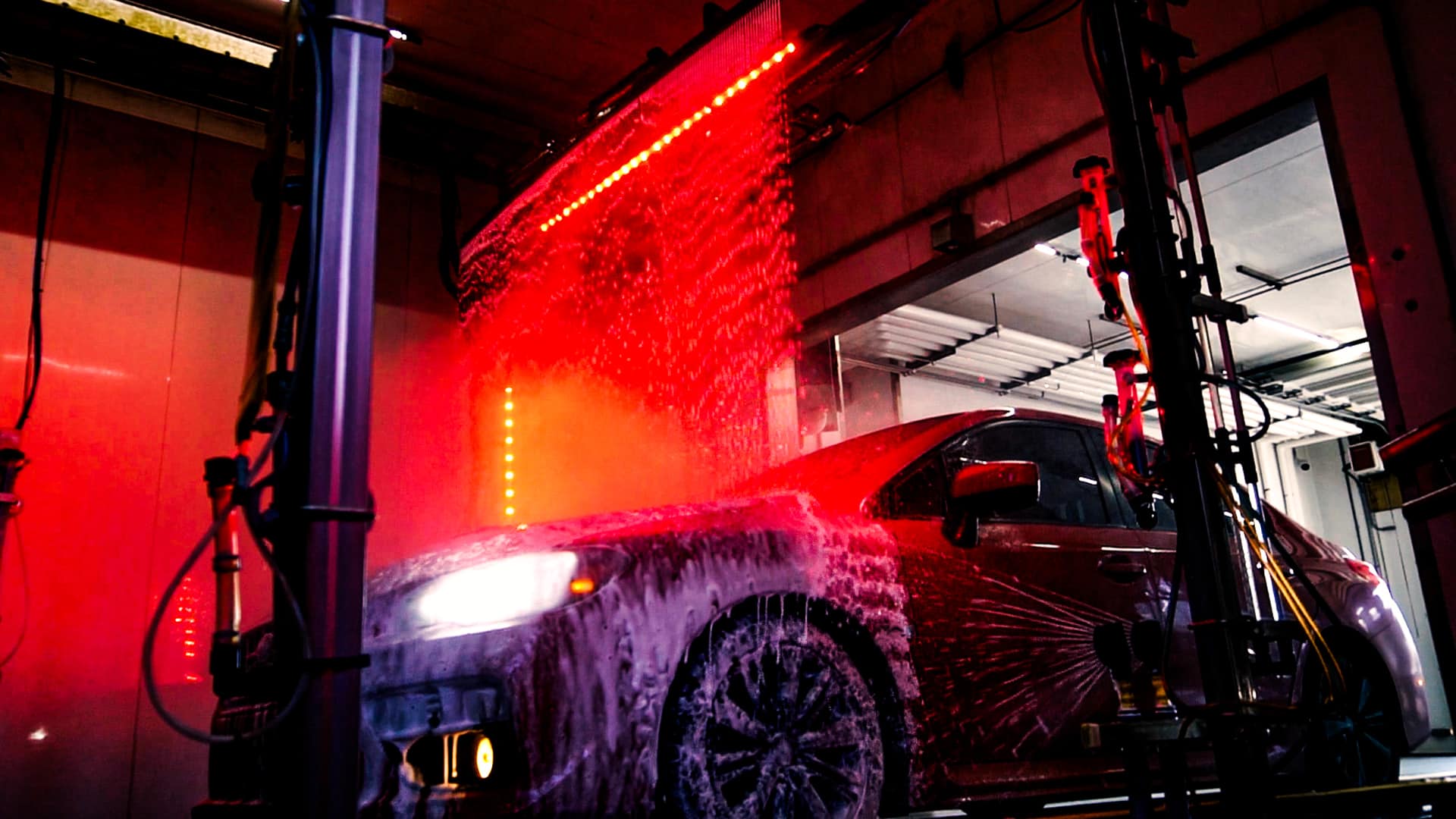
Why Chemical Delivery Is Critical to Consistent Wash Quality
Customers evaluate wash quality from inside the car, but inconsistent results often stem from how chemistry is delivered under real operating conditions.

CEO, Momentum Carwash Specialists
In this episode of Ask the Expert, we sit down with Michael MacDowell, CEO of Momentum Carwash Specialists, to discuss what it takes to scale car washes efficiently while avoiding the bottlenecks that can slow growth and impact performance.
Michael shares insights from years of experience in car wash development, equipment installation, and operational optimization, including how operators can reduce build timelines, improve throughput, and create more consistent customer experiences across locations.
From early planning decisions and faster startup timelines to upgrading existing washes and improving operational flow, this conversation explores the decisions that can have the biggest impact on scalability, customer experience, and long-term performance.
Michael MacDowell is the CEO of Momentum Car Wash Specialists. With decades of experience in car wash development, equipment installation, and operational optimization, Michael works closely with operators on site planning, throughput, startup timelines, and long-term scalability.
Through Momentum Car Wash Specialists, he helps operators streamline development, improve operational flow, optimize existing sites, and build car washes designed for long-term performance and growth.
Below is the full transcript of this Ask the Expert interview with Michael MacDowell.
Dan All right, Michael, well, thank you so much for joining us today, battling through surgeries and illnesses to be here and be a part of it. So really appreciate you making the time for us. If you could get us started, if you could just give us a sense of your background and what you’re doing today with Momentum and a little bit about Momentum as well.
Michael Yeah, absolutely. Thank you, Dan. Appreciate being here and getting the opportunity to talk to you. We started Momentum back in 2007. And for people that are not familiar with our company, we’re a design, build, and equipment distribution partner focusing on helping operators launch and upgrade and scale successful car washes. So we work across consultation, equipment selection, project coordination, installation, startup, post-install support,
And we try to do is remove friction for operators and add value. The best way we think we can do that is by helping them avoid delays, making smarter design choices, and getting to revenue faster. So my role is to help connect business strategy to operators’ goals and the practical reality of what it takes to build and run a successful car wash.
Dan (03:01.95) And I know a piece of that when you talk about getting to start up and washing cars quicker I know you guys have a 10-day installation Guarantee that you you guys you know, it’s obviously a big part of what you do Can you just talk a little bit about that program what that looks like and what brought you? To implement something like that for operators that are building new washes now
Michael Yeah, thank you. I think that’s probably one of the main focal points of our company. And we realized a while ago that having installs drag out for four, five, six weeks, and so many of our customers were telling us the pain that they were feeling associated with those installs taking so long. We decided we wanted to.
We wouldn’t like being treated that way if that was us on the other side of the fence. And so we decided how can we put skin in the game. And so our 10 day installation guarantee covers the full tunnel equipment installed. So that’s all the tunnel equipment, the conveyor, the back room equipment, all the chemical and airlines, the point of sale system, the…
the vacuum system, whatever’s in that SOW that we custom create for that client. Because our goal is to get an A on the test. And the way we get an A on the test is to do a lot of work upfront to make sure that we understand exactly what that client wants us to provide.
So, and then the way we guarantee our work is at the end of 10 days, if we’re not finished on the 11th day, we pay that client $10,000 per day, every day that we’re not complete.
what you know that makes us a little different. You know we’re not leaving the job site to go work at another job and we’ll be back in a few weeks to catch up. I mean we’re very dedicated to getting the job done in a very short amount of time and so you know it takes a lot of coordination and active project management to be able to pull this off but that’s what we do and it’s it makes a big difference to the operator because we’re in and out of there and they can count on us to be reliable partners.
Dan (05:14.37) And you mentioned that they’re talking about, you know, it takes a lot of upfront work. When people are looking to build a new site, what are some of the things you see, maybe some of the oversights or maybe some areas that, you know, maybe new operators are missing when it comes to building a new site for that upfront work to make everything easier downstream or down the line, you know, as you move into actually putting a shovel in the ground or putting equipment into the wash.
Michael Yeah, think a lot of it, you it depends on the client. know, some clients that have, you know, have been in the industry a long time, you know, may have a more precise means and methods to getting the output or the product that they want. New investors often, you know, need more help in understanding how to get that yellow brick road to the place that they want to get to.
Understanding, again, the client’s specific needs is paramount, but we think that a lot of the problems come into the site layout and site design. So our goal is to get involved very early with the client to help them understand what’s going to be the best way to get optimal ingress and egress. And those turning radius is correct so that there aren’t pinch points leading into the tunnel.
or leading into the vacuum area or exiting the property. So if we’re not involved early on, there’s not an opportunity to be able to provide that. But we’ve also got clients that want us to perhaps, like I mentioned, just do the equipment install and we’re more than happy to do that part of it, know, independent of everything else. So it really just depends on what the operator needs.
Dan (06:59.03) And so when somebody, let’s say a new investor in this space is evaluating a new site for a wash, what are some of the characteristics that you look at a site and say this site has really good potential to have a really high performing wash? Are there certain things you say where these are some of the pitfalls or things you need to avoid as you’re, again, before you’re even actually putting shovel in the dirt in that early planning phase?
Michael The first thing we’re going to look at is what’s the traffic count, what’s the surrounding other retail businesses, and what’s going to drive traffic to that location, what are the demographics, what are the closest competitors, and what’s the strength of those competitors. So that would be some of the first things that we’re looking for. And then, does the property lay out well?
Can we address all those things that we mentioned earlier and make sure that the site will perform? Because I think that’s probably one of the most important factors is getting customers in and out of there so that they can make an impulse buy initially, but also so that they can know when they arrive at the site that they can get processed quickly and back out on the road so that they know that you’re…
It’s not a fair fight when you’re competing with people that don’t process well.
Dan And you know obviously you guys have been at this a long time when you look at you know particularly Greenfield builds now are there sort of any new emerging trends or Sort of sort of a carryover between the builds that you’re seeing where there’s a very common push to either certain models certain sizes certain equipment as you guys are building new washes
Michael Definitely, we see a lot of interest going into secondary markets now, but also looking at smaller footprints in primary markets. There’s two advantages. One, the total cost of the build is greatly reduced. And when we got throughput that’s still in the, you know, for a 60 or 80 foot building,
Being able to throughput at 80 to 100 plus cars an hour really gives you a true advantage in the marketplace. that combined with the lesser cost of the build and the opportunity for additional sites to open up when you’re working with your broker to find those available properties.
that is a huge advantage and we think there’s going to be a huge move in the market towards that side of the business.
Dan And for operators then that are looking to scale, looking to find new sites that maybe have traditionally operated on what would be A type sites, how do you sort of reframe their thinking so that when they’re scaling and maybe now looking at B or C properties, kind of both sort of managing their expectations of what that site will be able to produce, but also…
How do you ensure that they’re having kind of a consistent experience between sites from what would have been their primary or kind of their A site, one of their sort of hallmark sites versus what that secondary site would be like?
Michael Right, well with a slightly smaller footprint and smaller tunnel length, you’re going to reduce the throughput slightly. But that still doesn’t mean that you’re not going to be able to achieve great numbers relative to, quite honestly, a lot of operators in the industry. So I think utilizing dual belts are a huge advantage.
The chain rollers can also run much faster than they used to in years past and the advantages of increased wash quality and chemistry have added to this throughput advantage also. But when you’re looking at those smaller sites and obviously ideally you still would like to find smaller sites that are A properties. But if you do have to step back from something that wouldn’t be graded quite as high,
The expectation would be obviously that the price that you paid for the property is reduced. And if your total outlay for the entire project is, let’s say, half of what a traditional build would be, then it doesn’t take quite as much revenue to justify the overall project and get the ROI that you’re looking for.
Dan And for operators then that are looking to potentially expand, what else can they look at internally to say actually maybe, what might make more sense is to reinvest in a current site and look at renovating that before moving on to, you know, trying to stretch myself thinner and move on to a new site and do this somewhere else.
Michael That’s a great one. We’ve got a lot of people that have reached out to us in the last year that are actually in that mindset. And one of the things that we do is we come in immediately. If they don’t have as-built drawings, we come in and scan their building so that we can actually see exactly what is located in what location. And then we’re able to take those.
those scans and actually, you know, really produce a fantastic layout of what needs to be augmented and done to improve on the throughput and processing and wash quality that they’re, you know.
they’re providing their clients. it’s a really amazing technology and it works so well because nothing has to be laid out with a tape measure the way we used to do it years ago. It’s a huge advantage in the presentation, the ability for us to show the operator exactly what we’re talking about.
It really, it turns out it’s great when we were talking to subs or anybody else that’s going to be involved in the project. They can see everything and understand it all. So it’s a tremendous asset.
Dan And in terms of those upgrades when you’re looking at it or looking to, again, augment that wash experience, are there certain things that you look at right away where you say, these areas are going to be able to provide kind of the biggest ROI or the biggest increase in either customer experience or wash quality? Obviously, it’s going to vary by site, but are there certain things right away you look at? Here’s where we want to improve first.
Michael Yeah, think, you know, obviously the first thing we’re looking for is, you know, what is the wash quality that’s being turned out at the site? And that’s really just an assessment, right? It’s just going in and being very critical about every area of the wash, you know, and oftentimes, you know, we see, you know, bottlenecks at different places that could perhaps be eliminated or reduced by adding technology.
There’s other opportunities to change the chemistry that would change the cleaning quality. There might be other barriers like changing the wash configuration.
Dan you
Michael where equipment is within the tunnel, there also might be opportunities to add blowers or reconfigure a blower room. We do quite a few of those for clients as well, just because we don’t see great drying results at the end of the tunnel. So that can be a combination of chemistry, but it also can be heavily dependent on the blower placement.
So I think it really is, you know, it’s really more of a consultation than a site assessment to be able to answer, you know, what we would do. I mean, you we’ve got so many operators that aren’t happy with wheel cleaning. That’s one of our specialties. So it just depends on the operator and what their needs are. And I think the assessment is the first part of that.
Dan And then for the equipment selection standpoint, when you’re helping an operator plan a new wash, how do you approach equipment selection? What factors usually play into helping them find the right pieces for what they’re doing?
Michael Yeah, so you’re looking for obviously places that need improvement and we’re a big fan of simple equipment that’s easy to maintain. So if it’s easy for us to be able to instruct their maintenance personnel on how to maintain it and it’s easy to take care of, that’s a huge advantage.
And so when we’re looking for what pieces might we replace, if we can simplify and turn out a higher quality product, meaning the clean vehicle, then that’s where we’re going to focus.
Dan So when you’re looking at kind of the balance between wash quality, long-term reliability, and throughput when you’re selecting equipment, how do those kind of three factors play into as well? I mean, you mentioned the simplicity of it. I’m guessing reliability and long-term reliability is another piece of it, because I know a lot of time probably there’s people who are just interested in unpicking the cheapest quote or the cheapest piece of equipment just to get it in there. obviously that has its drawbacks as well.
Michael Yes, it does. mean, we’re big fans of stainless steel. So, I mean, if you’re comparing aluminum to stainless, that’s one thing that we’re always going to, or mild steel compared to stainless, we’re always going to look at that advantage as far as a long-term hold.
you know, somebody that’s flipping an asset very quickly may not be as, you know, encouraged by that. But if it’s a long-term hold or, you know, part of a bigger build-out, I would certainly recommend products that have the longevity. And what we typically find is that there’s no added cost to selecting those products. It’s just a function of…
knowing what opportunity is out there and as a source and finding those good brands to work with. And we feel like we represent several of them.
Dan I think that goes back to what you said earlier too and having, you know, somebody like Momentum involved early on in the process so that you’re not sort of retroactively going back after you’ve made these initial equipment decisions and saying, boy, I wish somebody had told me this probably wasn’t the right thing to do in that case. So think, again, that goes back to what you’re saying that there are probably some subtle nuances that maybe new operators don’t understand.
other than just looking at a price tag to understand kind of the simplicity or the downtime, the maintenance, those sort of things that you’re only going to see later down the road, but can be a big hindrance to what you’re doing in terms of actually operating your wash.
Michael Yeah, and I think even a seasoned operator can have blind spots. It certainly depends on the client. We’ve seen some clients that are in the multiple build stage of their existence and their operations, and they’re still building in a manner that would
It’s frankly slowing them down so that they can’t get as many sites open as quickly as possible. I I think that’s probably one of the biggest lifts that we provide. And that’s being able to shorten the time from the initial construction start date to operating the site. that 10-day install is a great way to buy back time. But if the other parts of the…
the Gantt chart related to what the GC is providing aren’t taking advantage of that shortened time period to get the equipment installed by having their other trades ready and willing to accept those tighter timelines, then a lot of that advantage is lost.
Dan you
Michael So if we get in early enough and we’re able to work with the GC and look at their Gantt chart and have an opportunity to engage them, the client is pushing for that ability to shorten their timelines. We’ve got operators that have taken 30 days out of their Gantt chart. And so that’s a really powerful advantage to be able to get revenue 30 days faster.
Dan I think that’s another, you you make another important point there when we talk about involving a partner early. And even for a season operator, having somebody to be able to communicate with those GCs, I think a lot of times you’re seeing GCs who are not familiar with building car washes. So it’s a little bit difficult for them to sort of replicate what they’re seeing on a drawing.
They’re not going to make decisions based on what they know will function for a car wash or make suggestions based on it. They’re going to build as what they’re seeing and maybe sometime make their own choices based on that. think again, that goes back to what you’re saying about having somebody else there to help communicate that to the GCs and work through it. So again, that you’re in a place where you can get it open when you guys are ready to install equipment that everybody else is in place and has completed what they need to do.
Michael Yeah, I think that the quality of the drawings that you’re providing to the general contractor is a big component of this as well. mean, if the subs should be able to do their work.
without the equipment being placed, the vast majority of it. Everything that we’re doing after we install the equipment, it really should be a whip and a few wires hooked up and a few short connections on the plumbing side. And really, it should be able to go to operation very quickly thereafter. If everybody is waiting for the equipment to be installed to get the plumbing and electrical work done or for somebody to put a piece of paint
tape on the wall and write what needs to be mounted here, you’re really doing things in a very backwards way compared to where we are today. I mean, think that’s the opportunity for improvement is there, but perhaps it’s learning some new tricks that some of these general contractors and some of these subs aren’t comfortable with yet, but it’s definitely something that’s teaching
and doable. You just have to decide that that’s what you’re going to do and that’s the output that you want to get to a shorter build time and faster startup.
Dan And so one area I wanted to cover here when it comes in terms of planning is reclaim itself. So when you’re planning for reclaim sites that may not initially be looking to put it in there, is that something where you say plan ahead and put your tanks in there in the event that you move back to it? And secondarily, what are the other things you see when reclaim when you go to existing sites to see mistakes maybe people have made in their initial setup of the reclaim systems?
Michael Yeah, one story comes to mind.
Many years ago, I think it was in 2000, I sold BMW manufacturing, a car wash system, and they didn’t put reclaim tanks in the ground. And I asked them, I said, why are you choosing not to put reclaim tanks in the ground? They said, well, but the city is giving us free water for 10 years. Well, okay, well, that’s a pretty good reason not to put it in the ground. I can tell you after that was over, they were ready to put the tanks in the ground though. So, you know, but…
over those years of me doing this, I know that…
I’m less than 1 % of our sales have not had reclaimed systems. And I think it’s probably because I’ve promoted it, obviously, and I know there are some parts of the country that might have some reasons why water is just so affordable that they might not do it. But for the vast majority of the country, it’s kind of a no brainer. And so when you add a system like Innovate, produces…
It really is a great opportunity to save money and in the long term, not have too many headaches associated with maintaining another piece of equipment. And that’s important because if the maintenance is a problem, then it’s going to be a problem. And I think you guys have got an amazing product that doesn’t require a tremendous amount of maintenance.
Dan And you mentioned it there, and I think this is another important point to revisit, is talking about that site has free water, they’re getting their water for 10 years. The importance of the longer vision to the future of what you’re trying to do. So in terms of building your wash, what is it gonna look like in five years? Are you, again, when you talk about some of those bottlenecks, are you putting yourself in position where you are limiting throughput, where you’re…
your inputs are always going to be more expensive, because that’s just the way it works, but where you’re going to end up at a of a dead end and have to absorb a huge cost to go back and replace something you did five or 10 years ago because you were only looking two or three years or six months into the future. how important is that sort of longer lens into the future when you’re setting up your wash initially?
Michael Personally, even if the water were free, I would put the reclaimed tanks in the ground. Because the likelihood that that, of course, I’ve never run into that again and I doubt that I ever will. But even if the cost of the water was extremely cheap, the likelihood that it’s going to remain that way is probably, it’s just like electricity. Electricity is not going down. They’re not giving us rebates or less.
less expensive this year. So water long term will probably get more and more expensive. So I think yeah, those inputs can be addressed by putting in reclaimed tanks and putting in a reclaimed system and addressing those expenses. It definitely is a factor and I wouldn’t recommend a bill that didn’t do it.
Dan In terms of reclaim itself, are there certain areas where you normally direct customers to be using that water? Are there certain applications where you think it’s sort of the best fit to be able to get the most out of that water?
Michael Yeah, I think anything below the mirrors, side mirrors and down on the vehicle is the most utilized application area. undercarriage, wheel cleaning, bumpers.
side panels, anything. I think those are all great applications. And we’ve used reclaimed water, again, depending on the operator, in a lot more places we’ve used it all of car in many operations. And I think that’s really where you get the greatest savings. As long as you’ve got adequate space in the tunnel to be able to address the vehicle properly to remove any of the reclaimed water, I don’t think it’s a problem at all. And in fact, I would encourage it.
Dan And then moving on to just to shift gears to RO, another important piece of what you’re doing, how do you help an operator determine the infrastructure that they’ll need to support RO when you’re looking at things like water softeners, booster pumps, those sort of things? How do you address that usage?
Michael Yeah, it’s really pretty simple. mean, we’re looking at the total vehicles that need to be processed per hour and then dialing in the system based on that. it’s just one of the formulas that we run and it varies depending on the throughput capacity of the site.
So just like the same thing we’re doing with reclaim, it’s just a formulation that we’re putting in. And so if you’re looking at a 60-foot tunnel versus a 150-foot tunnel, those numbers are pretty different based on what the total capacity of the site is.
Dan And then for that water as well, when you’re thinking of RO reject, another sort of reuse option for that, are there other areas that get, same thing as with reclaim, are there areas there where you’re saying, here are the best places to feed that to again maximize what you’re getting out of your system and produce a quality car?
Michael Yeah, so we’re typically looking at, you know, just before our finishing area, you know, being able to do any kind of high pressure that might be all of car as a great application for that hard water. That’s probably our favorite place to utilize it or anything that might be spraying a mist further down in the tunnel. We’re going to try to maintain that and keep that, you know, minimized. But those are probably the right applications.
Dan And then so, again, just wanted to go back to thinking about operators that are looking to scale. Are there certain areas you tell or you evaluate when you’re looking at one existing site to say, yes, you’ve met these sort of metrics and we can replicate that at a different site? Or are there certain areas where you’re saying, you you’re looking at their margins or cost per car, those sort of things, where you’re saying, we need to dial these things in first at site one before you move to site two?
Michael Yeah, I think it’s always beneficial if you can dial them in at an existing site. There’s a lot of benefit to that. And so we call that basically site optimization, right? And we’re always looking for, in our mind, the way to get the best
customer experience, pardon me, is to be able to have the highest throughput. So, if people are busy, they’re very time crunched, they’re time conscious. And so, I’m looking always for how can I increase the customer throughput and get the most cars, clean, shiny, dry cars out of the tunnel. And so, whenever we come in, we start looking for, when we crank it up, where do we hit a problem?
does the pre-soak need to be go up and in strength to be able to process cars faster? Because can we address the dwell time as the equipment? it need to be moved? Does the…
the wheel cleaning, is it hitting the wheels properly? What do we need to do? The pre-rinse, where are we out there? If it’s a rain bar, shower bar, and it’s two rows, if we went to a three row, would we be able to, is the problem not getting the soap off the vehicle? We’re always looking for where’s the problem, are we in the drying room, are we not be able to dry the vehicle? Well, can we reconfigure the dryer so that we could increase the speed more? So we’re always looking for where’s the bottleneck, where’s the problem?
so that we can get higher throughput and feed that information back to the operator so that they can make a decision. Yeah, I want to make these changes and increase my throughput and we stand behind that. We’re confident that we’re able to do that for clients.
Dan And so, you know, obviously the consistency and quality, those are to be two driving factors to retaining members, growing membership as markets continue to saturate. And a momentum recently introduced to Hatch, you talk a little bit about that program and what the purpose of Hatch is for operators.
Michael Sorry, so we introduced Hatch a little while ago, so it’s a brand new product for us, and basically it’s built around a three lever system. One lever is traffic and customer intelligence, and that’s driven through capture. That’s including the visibility into passing traffic and current customers and their…
the competitive behavior. The second lever we throw is a CRM in sales execution and that lever is powered by Flex Wash and that gives the site teams better information and better prompts on sign ups and cancellation conversions and ability to track clients and understand their consumption.
habit. And then the last lever is handled by momentum and that’s coaching and accountability. And so we’re using the recorded sales conversations and scorecards to help improve the customer conversion performance. the problem that Hatch is solving that so many washes are leaving membership growth on the table because they lack the visibility, the consistent selling and
the discipline follow through with the sales people. So we really think it’s a great opportunity to grow that side of the business and it’s just again money that’s being left on the table if you look at the average number of sites that are cut, I’m sorry, average.
membership that most sites have. It’s only below 3,000 customers per location. We just think there’s a tremendous upside to grow that because the greatest operators in our industry far exceed those numbers. It’s just because they’re doing things differently and addressing a lot of these shortcomings that we’re trying to shore up with a Hatch Program.
Dan And so acquisition’s a big piece of that. Hatch is helping you on that end. From a retention standpoint, what are some of the things you look at that the operators that have strong membership do really well to make sure that they’re members, stay members, and don’t go try somebody else or just give up on it entirely?
Michael I think that these are simple things, but I think they’re very common to the operators that have the greatest club memberships and the greatest retention. And that’s the customer experience. And it starts out at the gate, you know, when the client enters the property. Are they being received by somebody that’s friendly and happy? Are they seeing a wave? Are they seeing a smile?
Are they greeted by somebody like that? And I think if that’s the case, then you’re probably addressing a shortcoming that most don’t. As I travel around and go to car washes, that’s not typically the experience that I have.
So, you know, I think that’s the first, that’s really easy to do. And then as you progress up to, you know, the loader area, then, you know, it’s same thing as the loader on their phone or is the loader, you know, doing a good job of smiling and waving and giving the thumbs up to somebody when they place their car into neutral. And, you know, are they happy doing what they’re doing? And does the, is the customer experience, you know, really great? And so I think it really,
Those are the things that come to mind that are outside of obviously wash quality.
Dan Then obviously, wash quality being a huge piece of it. again, as you, we’ve talked about this a little bit, but as operators move to multi-sites, how can they ensure that consistency of customer experience between those two sites? Because even if the configuration is exactly the same, you have changes in the water is going to be different, the site’s going to be slightly different, there’ll be a whole bunch of different small variables that can make a big impact. So how do you ensure consistency of experience?
between locations so that members again aren’t finding that there’s a drop off between any of your sites.
Michael I think first of all, again, from the.
The reception and the customer service side part of that obviously is you’ve got to have the standard operating procedures in place that are going to give the employees a framework to refer to on what are the job expectations and how do I engage with the client. And before that, really, it’s the hiring principles. And we feel it’s very important to have a salesperson at the point of sale
We could discuss the pros and cons associated with having a kiosk there, but regardless, I would still say that you’re going to need to interface with your clients and be out there and be present so that when they have questions, you’ve got somebody to engage with them. If your goal is to sell more memberships, this is the model to get there.
And then when it comes to the wash quality and differences site to site, you’re exactly right. I think there is no universal pill. You have to dial in those locations. And especially if you’re trying to blend equipment, if you’ve purchased an existing site and you’re trying to make that customer experience be the same, that’s a much larger hurdle to cover. again, site optimization.
and having somebody that’s going to care about your success as much as you do. And so when you’re looking for a partner, that’s the way we feel about it. We don’t succeed if you don’t succeed. if you can find a partnership that will allow you to grow and be concerned about your growth, I think that’s a very important part of this relationship.
Dan And obviously you guys, you you see that relationship as being partners in this and like you’re saying, your success is our success. So again, I think that’s another obvious differentiator for you guys clearly there that, you know, you are thinking yourselves as very much a partner in what is happening as opposed to a distributor or an installer or whatever it is that’s just providing a service. And I think there’s tremendous value in that knowing that again, you guys putting your money where your mouth is really with these, like something like the 10 day installation guarantee.
clearly you understand the importance of helping as a partner and getting the wash up and running and performing well. So a tremendous value to have somebody like you guys on the operator’s side.
Michael Yeah, Dan, one other thing that I think we’ve had a lot of success with over the last year has been our CAPEX projects. And really, it really was kind of an offshoot of what we were doing with our 10-day install. And the reason it’s really powerful is, number one, we’re basically taking the lessons that we learned, know, becoming very efficient at doing a complete install. And then we’re…
coupling that with the smaller, more, you know, smaller overall project, for example, conveyor replacement or blower room enhancement. And so when we come in, we can do a chain and roller replacement in a night. And so, you know, if you’re talking about the upside to the operator,
Now, instead of them being down for multiple days, we come in at the close of business and at the opening of business the next day, they’re back up and running. That gives them some peace of mind that they’re not going to disrupt any of their flow and they also haven’t caused a tremendous…
problem with their internal maintenance people trying to pull off that lift. So that’s one with a dual belt conveyor. We actually do it two nights and with blower replacements, those take a little bit more just because it’s a little bit more to deal with. But all three of those, we again get with the client. We understand exactly what they want. We write a very specific SOW that we have them review. Then we review together.
to make sure that we all, everybody understands exactly what we’re going to do because the last thing we want is for us to get anything other than an A on the test. And then that way the client knows they can count on us and we actually put…
Michael money contingency out there in front of those as well so that they realize, okay, well, if they don’t meet that, they’re going to suffer, you know, just like I would suffer. And I think that gives people a lot of peace of mind. Again, we just want to remove friction and to have, you know, long-term clients that are, you know, excited about doing business with us. And, you know, that’s the way we get there. We make sure that our clients are taken care of and that their needs are our needs.
Dan That’s great. so just to sum up and end here, what’s on tap for momentum looking at the next year, 18 months? What are you guys excited about? And what are you guys looking at going forward here?
Michael Yeah, thank you. So we’ll be at the ICA show. We’ve got a booth there. Please come by and say hello and talk to us more about some of the programs that we’re doing with the 10-day installs, the CAPEX projects. We’ve got multiple configurations of tunnels that are already put together so we can sit down and very quickly go through with you.
options. So it’s really simple for a client to be able to say, okay, well I’m interested in 110 foot package. Here you go. This is our standard package. We’re happy to deviate it any way you want to make it a custom layout for your application. But those are already ready to go and we can talk to you very quickly and efficiently about what the layout looks like, what the components are involved and what the price would be for you to be able to purchase that system and get that into place in 10 days or less. So that’s really
what we’re excited about moving forward this year and obviously Hatch and being able to help people grow their club memberships and so that’s a big part of it too. Please come by and we can do a site assessment and tell you what we think we can do for your site to grow the membership.
Dan That’s great. Well, we look forward to seeing you at the show in May and good luck and continued success for the rest of the year and good health to you and recovery here. Good luck to momentum the rest of the way. Thanks Michael.
Michael Thank you, Dan. Great talking with you today. Bye.
Customers evaluate wash quality from inside the car, but inconsistent results often stem from how chemistry is delivered under real operating conditions.
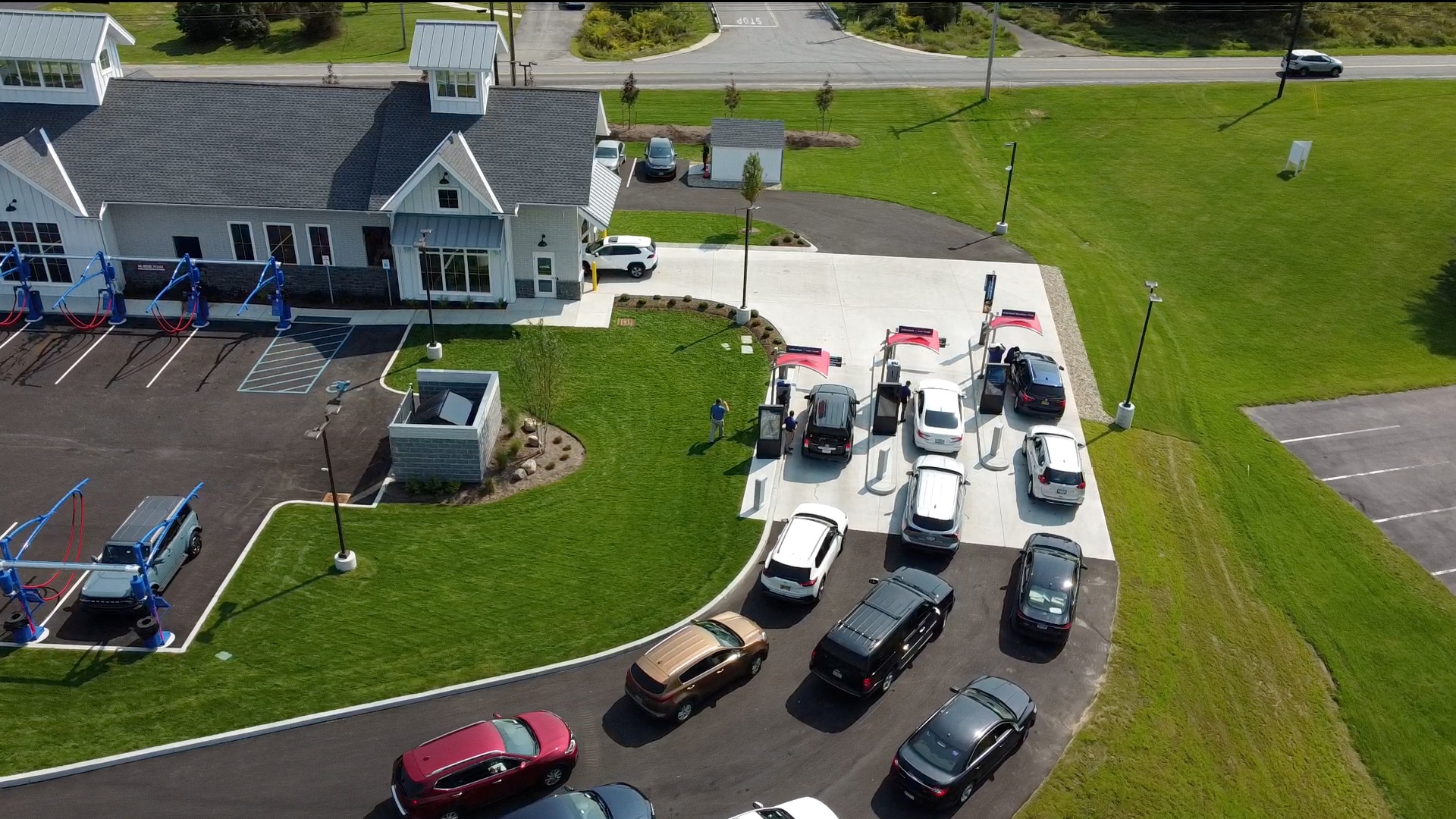
Learn how car wash operators can streamline processes, boost throughput, and deliver a consistent customer experience by improving flow and efficiency.
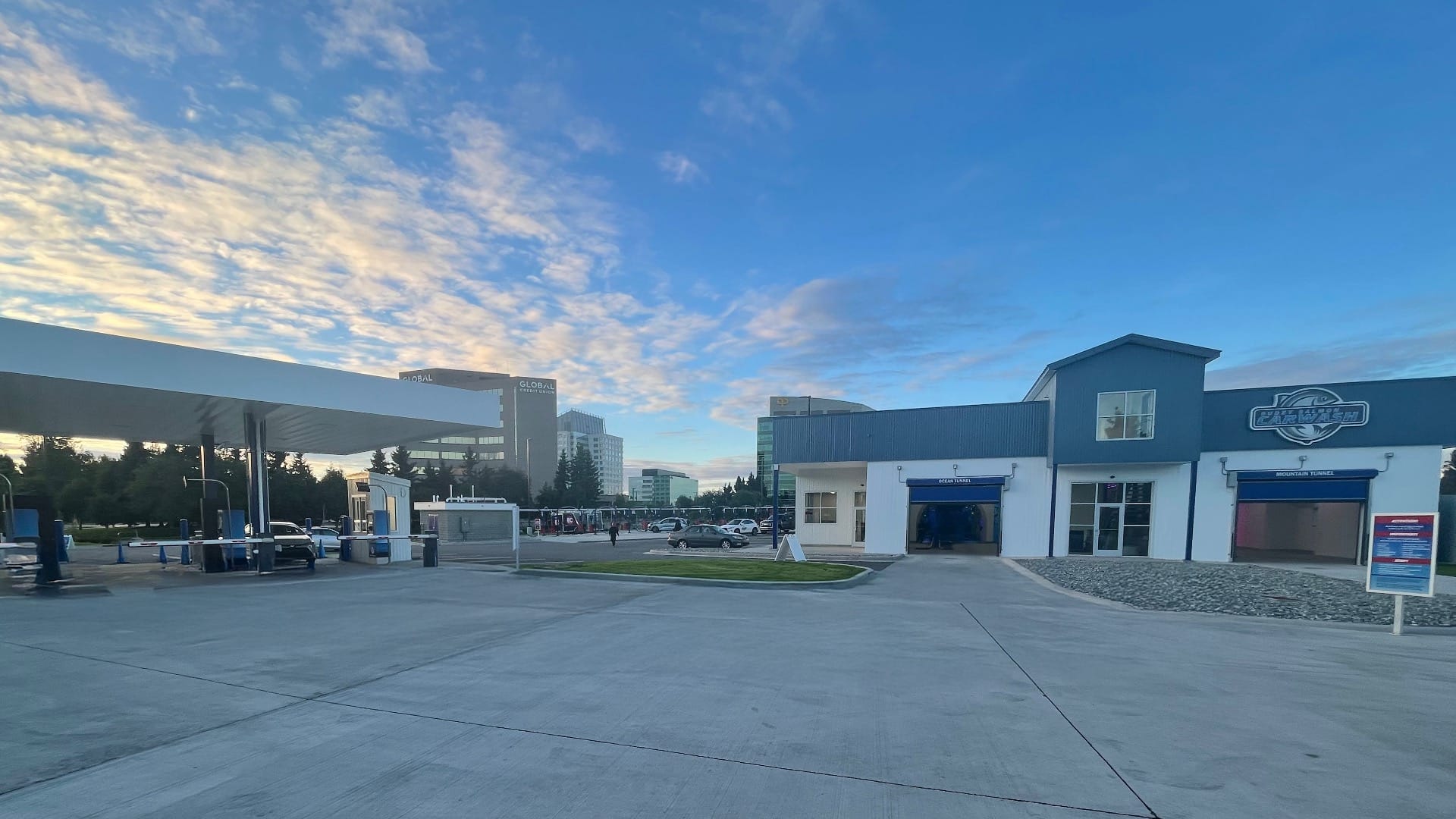
See how Sudzy Salmon in Anchorage optimized a fixed-layout tunnel to go fully prep-less, hit 300+ cars/hour, and boost memberships.
Chemical Delivery System
Water Treatment System
Spot-Free Rinse System
High-Pressure Pump Station
Conveyor Hydraulic Unit
We use cookies to personalize content, provide social media features, and analyze our traffic. We also share information about your use of our site with our analytics partners. You can change your preferences at any time. For more information, please see our Privacy Policy and Cookie Policy. Privacy Policy Cookie Policy
REQUEST A QUOTE
Interested in using our waterjet cutting services? Complete the form to request more information.