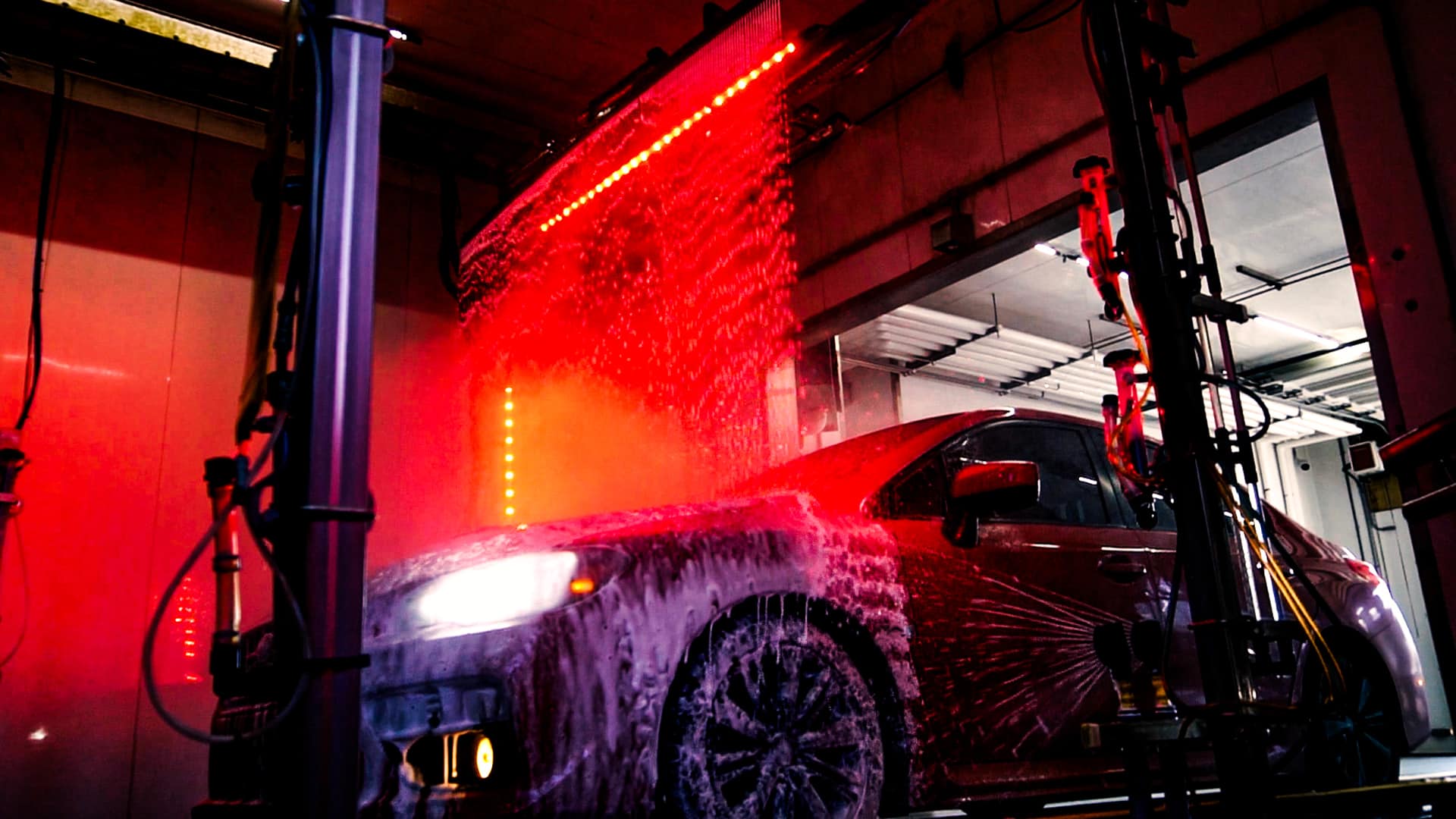
Why Chemical Delivery Is Critical to Consistent Wash Quality
Customers evaluate wash quality from inside the car, but inconsistent results often stem from how chemistry is delivered under real operating conditions.

President, Focused Car Wash Solutions / Owner-Operator, Wild Blue Car Wash
In this episode of Ask the Expert, we sit down with Aaron Green, President of Focused Car Wash Solutions and owner-operator of Wild Blue Car Wash, to discuss what actually goes into building and running a successful car wash.
Aaron shares insights from more than 20 years in the industry, breaking down how site selection, layout decisions, and day-to-day operations all impact customer experience, efficiency, and long-term results.
From early planning mistakes to operational challenges around staffing, cost, and water usage, this conversation explores how operators can make better decisions upfront and build washes that are easier to run, more consistent, and more profitable.
Aaron Green is the President of Focused Car Wash Solutions and owner-operator of Wild Blue Car Wash.
With more than 20 years of experience in the car wash industry, Aaron has worked across development, operations, and distribution, giving him a well-rounded perspective on what drives successful car wash businesses.
Through his work with Focused Car Wash Solutions and his own sites, Aaron works closely with operators on site planning, equipment selection, and operational strategy, helping them make better decisions from initial concept through day-to-day execution.
Below is the full transcript of this Ask the Expert interview with Aaron Green.
Aaron Green (Cold Open):
Inside of that three to five-year window, you need to be taking a look at different aspects of every customer interaction. You need to be asking: where can I get better? How can I get faster? How can I make this more up to date? How can I make this easier and simpler for my customers—our car wash customers—to get in and out and provide a better value?
Dan St-Jacques:
Welcome back to Ask the Expert, where we sit down with operators and industry leaders to share insights that help you build and run a better car wash.
I’m Dan St-Jacques from Hoffman innovateIT, and today I’m joined by Aaron Green, owner-operator of Wild Blue Car Wash and President of Focused Car Wash Solutions.
We’re talking about what actually drives performance—from site selection and layout decisions to operations, staffing, and managing cost in today’s market—and where operators tend to get it wrong early on.
Let’s get into it.
Dan (00:01.285)
All right, Aaron, well, thank you so much for joining us. Before we get started, obviously, I think the best place to start is if you can just give everybody a sense of your background in the car wash industry and what you’re up to today.
Aaron Green (00:11.502)
All right, well, I’m Aaron Green, and I got into the car wash business kind of by dumb luck. I met some people that wanted to. I was managing projects for Quick Industries out of Dallas, Texas, out here in Colorado. I met some guys that wanted to build car washes. I was going to be a developer slash builder, and through a series of events, I ended up being the operator and a small minority owner. And that was back in 2005. So I’ve been washing cars for over 20 years.
The majority partner wanted to sell those in 2016, kind of early on in the private equity, starting to purchase things. In 2014, I started Focus Car Wash Solutions, which was a distributor for ABW and Tommy and a few other people. And when we sold, I started doing that full time. I’ve owned dry cleaners. I’ve owned the car washes and now we run Focus Car Wash and we’re back in owning a couple out in Missouri Express Tunnel.
Dan (01:15.515)
So let’s start on the car wash, the projects, the site management side of things first, then we’ll dive into the operations side as well. So when you’re looking at a car wash project, are there particular characteristics you look at where you say, this site makes sense, this site has strong potential? Are the things you look at and see, here’s a really good chance for this wash to be successful before shovels even hit the ground?
Aaron Green (01:39.394)
You know, I would say over the years, it’s changed a little bit. But visibility is an incredibly high priority for me today, even more than what maybe I used to put on Access or how easy it is to get in and out. So visibility and then movement inside the property. Is it easy for a customer to get around? I think that’s incredibly important.
Once you start entering a market, I’m in Denver, so once you start entering a market that maybe is saturated a little bit and has a lot of competition, start moving maybe access into the property up a little bit higher than visibility. There’s a lot of car washes, and so customers are going to move to something that’s maybe a little bit easier to get in and out of versus visibility.
Visibility and signage, what you can do and what you do on that side, think are incredibly important.
Dan (02:39.639)
Now how about on the kind of on the flip side of that, are there certain things or certain mistakes that you see operators make early in the design phase of a wash where you say, you know, these are things that come up often where maybe they’re oversights or certain areas where people aren’t paying as much attention as they should. I know we spoke with Chris Bassa of Simon Eyes before and he said he’s always amazed that people don’t take a water sample before they do anything else there to understand what kind of water might get into the site. Are there other things that you see where you say,
Yeah, we need to be focused on this before you start designing anything else in your wash.
Aaron Green (03:13.133)
You know, think water is important, but I always think that there’s things that we can do before we operate. You can increase your water softener. You can do a lot of things between looking at a site and actually operating that site to maybe overcome some of those things. I think a couple of areas that people don’t. They’ll skinny up a drive lane or.
They’ll skinny up their vacuums to try to get more vacuum spaces. They’ll take it down to, if we say in the industry, a 10-foot minimum is kind of the vacuum space. Well, I can get five more vacuum spots if I’ll go down to 10-foot spaces instead of that 12-foot number. And I think they place too much importance on skinning up some of these areas and making the garage doors tight or making the turn a little bit too tight or I can get five more feet of tunnel space if I make that drive the bare minimum to make that radius turn. And it really long term can hurt your production and hurt the experience. I see customers all the time. You open the door to a vacuum and it hits the hits the vacuum hoses, or they can’t open it because the guy next door has his, or yeah, that SUV had to make a two-point turn. It just really kills the experience. place less importance on five feet of tunnel and more on the experience and the turn radius and wider garage doors. And then the other thing is, I don’t think people design in a place for storage. I drive through car washes all the time and see their chemicals stacked in the corner or the shovels and the rakes and the, you know, everything stacked in the corners of the tunnels. I don’t think we look at tunnels and we don’t look at storage and then training. I place a lot of importance on training your staff and there’s people don’t design in a place to do that.
Dan (05:26.239)
And then so kind of along the same lines and I mean clearly how important is it to involve you know experienced operators or consultants or somebody you know like focused early on in the process you know before you’re getting with architects and GCs and those sort of things how important is it to have especially you know if you’re either a newer operator or somebody operating a new market how important is it to have that relationship before you’re putting your actual wash down?
Aaron Green (05:50.446)
It’s probably the most important thing that you could do. When we got started, people asked if we get the right answers. Yeah, we got the right answers to the questions we asked. Will this equipment wash cars? The answer is yes, all equipment will wash cars. Does it do it efficiently? What’s the uptime? How hard is it to repair? What’s the turn rate? We didn’t have a clue what questions to ask.
And so we got the right answers to the questions we asked. And there’s no way in the world that you can buy 20 years experience. You can involve someone early on that has decades of experience in washing cars and seeing it all and tell you where to rely it. And then it’s up to the owner to avoid the entrepreneurial, what I call the entrepreneurial yeah-butt.
Yeah, but you don’t understand. Yeah, but you don’t know my market. Yeah, but you don’t. We’ve seen a lot. You’ve to use that experience.
Dan (06:57.253)
I think you see it a lot in the car wash industry, maybe more than in the other industries that I’ve seen. The willingness to collaborate and idea share between operators I think is something that’s pretty unique. Not everybody’s going to share things like car counts and those sort of things, but mistakes that people have made in the past or pitfalls to avoid. think there’s a lot of idea sharing that goes on. If you’re willing to reach out to a few more people, don’t think that you have all the answers like you’re saying because you might not be asking the right questions. So you might be getting the answers, but what good does it do if you’re not asking the right questions? So think again, like you’re saying, clearly it’s vitally important to get the opinions of some other people. Even if you think you’re the smartest person in the world, it’s probably helpful to get a few more opinions on what’s going on before you start actually trying to wash cars.
Aaron Green (07:38.543)
It’s and you know, that’s where trade shows and those opportunities can come in. They’re so important, you know, I know that they’ve not been Maybe maybe they’ve gone down and in numbers of attendance and things like that But there’s some incredible people that still attend these places and they’ll tell you everything that they know they’ll
They’ll tell you about turn radius. They’ll tell you why vacuum spacing is so important. I mean, they’ll tell you everything if you’re willing to go and have an open mind and watch.
Dan (08:12.71)
So let’s move off of new builds. When you’re looking at sites, when does it make sense for an operator to remodel an existing site instead of looking to build new?
Aaron Green (08:24.312)
You know, I just did a talk on modernizing your wash at the Southwest here a couple of weeks ago. there’s a technology law out there that says technology doubles every two years. And faster processing, better customer interaction, better controls of your equipment. And I wouldn’t say that you’ve got to revamp your wash every two years.
Inside of that three to five year window, you need to be taking a look at different aspects of every customer interaction. You need to be taking a look at where can I get better? How can I get faster? How can I make this more up to date? How can I make it easier and simpler for my customers, our car wash customers to get in and out?
Dan (09:18.182)
And so are there particular upgrades you look at that you think have the biggest impact on customer satisfaction and then also upgrades that can improve quality of life for either operators or help their staff perform more efficiently on both sides of those things? There things you look at that say, are a few areas to focus on that’ll have the biggest immediate impact on what you’re doing.
Aaron Green (09:41.793)
I think your customer face-to-face interaction, whether that’s point of sale, your menu boards, whether you’re, you know, there’s been a movement. 20 years ago when I got into the business, it was all about the pay station and the kiosk. That was the thing to go and buy. And those evolved over time, and we’re kind of back towards tablets and more customer face-to-face moments.
I would start there for sure. I I think that is just a massive opportunity today. We’ve gone to experience purchasing versus transactional across, not just in the car wash business, but I think across the entire retail industry. So finding those opportunities and then inside of the tunnel, any way that you can find to get more efficient is really, you know,
We bought a wash that was existing. It was only four, maybe five years old when we bought it. And we changed the equipment layout and utilized 80 % of the existing equipment. We didn’t buy substantially more equipment and newer updated brushes. But we certainly.
Just the way car washes can be laid out today, the changes in chemistry, and how fast you can put things together, your dwell time. We were able to move some things around and get a better wash quality and experience and speed up the conveyor so that the customer wasn’t on site as much, not on site as long. I think focus on the customer moments, the guiding on.
You know adding some of these new products, know, graphing is a big word today that I Don’t think customers have a clue what graphing is car wash customers. They know the word ceramic and so, you know But really explaining and training your staff and what those things are so they can explain what it does The long-term value of your customers in adding some of those products
Aaron Green (12:03.326)
It makes it easier to clean the next time they show up on your property. You can speed up the process. Their value goes up because their car just gets cleaner over time and stays cleaner. So I focus on those.
Dan (12:19.182)
So you talked about remodeling that site. Can you just give everybody kind of a sense of the sites that you run, what those sites look like, what the model is, size, all those sort of things of the actual washes that you’re operating as well.
Aaron Green (12:30.616)
Yeah, there are two express tunnel car washes. We have a cashier lane attendant, and then we have a kiosk lane for members or credit card transactions. One of them is 90-foot building with a 90-foot dual-belt conveyor. And then the other one is a 90-foot with a 75-foot. had a tire shine that we took out.
We wanted to simplify the process and provide a consistent product. And we just weren’t getting that out of the tire shine. So we simplified that as being remote manager. I live in Colorado and these are in Missouri. So long drive to adjust the tire shine if I needed to or train my staff. so they’re 90 foot buildings and dual belt conveyors.
We at the one that we purchased and we remodeled, they were struggling to dry a car. Their spacing was wrong. Their drip time was off. The number of dryers that they had was off. So they were hand drying every vehicle. And they were prepping. And we were able to add some equipment. The ABW high pressure robot often sells something similar.
We were able to put that in and eliminate the upfront prepping and increase our drip time, get a better chemical application, and put more dryers in because we were able to move equipment. So we were able to take that place from a maximum of about 60 cars an hour over to 120. So we doubled it.
Dan (14:10.717)
Which is great. mean, you talked about it there, you know, when you’re the importance of those customer moments and those sort of things where you’re taking away something like prepping. How important is it to educate the customer that you’re actually doing that to improve their experience, not cheapen their experience by, you know, what may be perceived as you’re taking something away when in reality what you’re doing is actually giving them a more consistent wash, more likely than not, and also making it quicker for them to get through. So how important is it, you know, and how do you go about educating your customer there to let them know these changes are actually of benefit to you.
Aaron Green (14:44.906)
It’s, you know, I think the only way to really educate the customers is to educate our staff, because they’re the ones that are going to be talking to them all the time. You know, we try. We try to put up notices. We try to tell people what we were going to do. And, you know, they say roughly on your Facebook post or your Meta post, only 5 % of your followers are going to find that post or see it.
You’re trying to hand out cards before you do it, letting people know what you’re going to do. And it’s a very small percentage that see it and pay attention. So educating your staff. And then I think the way that we educated our customers was we did a re-grand opening. We did free washes for over a week to get people in and to actually experience it themselves. And there’s still some pushback. There’s always going to be.
But I think within that first year, we noticed, and people have really noticed, significance in consistency first. It’s the same experience every time they pull into that property now. And I see operators all the time. They have their little bug sprayer. They’ll spray the windshield, and they’ll spray the driver’s side mirror, but nothing happens to the passenger side.
You know, there’s things like that, moments like that where over the long run, people have really appreciated the consistency of the wash. And some still argue that the quality is down because, yeah, inside the license plate, we’re not, you know, they were hand drying. So they were able to get into all of those places and do it. But it’s consistent today. And I think through educating our staff, we were able to curb some of that and really tell the customers what they were getting better.
Dan (16:47.485)
So you’ve been doing this a long time, obviously. What are some of the biggest operational challenges you see now versus maybe what you would have seen 10, 15 years ago?
Aaron Green (16:57.257)
Cost is one of them. That’s the elephant in the room. And I’m not just talking equipment. I’m minimum wage is skyrocketing. your overall cost, utilities, insurance, cost is just a massive operational challenge today to continue to provide a high value at what a consumer feels reasonable to pay for.
At the end of the day, they can go all the way back to driveway washing if they chose to. And so it’s up to us to make sure that we’re providing a high value. And managing cost has just been one of the things that are completely out of our control. And then staff today is significantly different than it was 15, 20 years ago — what staff deems important.
Wage is a part of it, but community, their involvement in the wash, their opinion, and how much time it takes and effort it takes to put into training your staff and developing that community with your staff and all of that is significantly different than.
Dan (18:26.471)
As you mentioned training a handful of times now, how do you guys approach training your staff and is there a formal program or how do you go about to make sure that your staff feels like they have a voice but also feel that they’re confident in what they’re doing?
Aaron Green (18:40.652)
Yeah, so I lay out a 12-month. At the beginning of the year, take kind of, you know, I go through the calendar and I look at special months. I look at special things. In Missouri, what’s coming up next month is pollen season. And so April is when we were going to focus on pollen and the importance of washing your car with our – with our text program and our social media program. So I backed up into, say, March. And we’re going to train on pollen and what it is on your car, how it affects the quality of your car, how it can scratch, it becomes acid, what that does. So I laid out a 12-month program. And then, every month we have staff training that maybe precedes that month of what they’re doing. And then we do staff training on safety, car wash knowledge, what the equipment is, chemical knowledge, safety. And then on top of that, then the site managers have their manager meetings every week.
Dan (19:50.494)
So to circle back on cost too, I know you’ve talked before about some of the water bills that you’ve seen. And obviously that’s one of those costs that keeps increasing and obviously it’s going to depend on region, municipality. Can you just share a little bit about what maybe operators newer to the industry should understand about the water and sewer costs and water management as it relates to the overall cost of operating?
Aaron Green (20:15.054)
Yeah, it’s something you have to pay attention to. If you’re going to make the decision to get into the business, well, there’s nothing I can do about the cost of what they’re charging me. And out here in Colorado, we talk about a water sewer tap fee will be over a million dollars out here today. Ironically, in Missouri, the water sewer tap is cheap. One of my sites, the…the per thousand gallon charge is outrageous. And it starts at 2000 gallons and then they start increasing it. So huge water bills. And I think they are what they are. The goal and what you have to pay attention to is how do I get more efficient? You know, there’s certain things, I think if you’re looking back at an early operator and they go, I want to put.
I want to put this in, and I’m talking about reject water from your RO system. OK, how can I capture that? How can I reuse that? Where can I do it? Reclaim systems early and low is my theory on that. so back to the wash that we took over, the high pressure was way late in the wash process. Well, that eliminates really the ability to use reclaim in that facility in that particular. And those are high pressure pumps using, you know, were Wanner 25, so 20 gallon a minute pumps. How can I move that up in the system so that I can start to use reclaimed and get more efficient with my water usage and rethink the layout possibility there? and then early on, even if you don’t think you need reclaimed.
It’s way cheaper to put tanks in the ground today. It’s way cheaper to get that pipe back in the ground. Unconcreting is expensive. It’s going to cost you significant amount of downtime and planning. And so even if you don’t think you are going to, and that’s where someone like you all or me that’s been in it for 20 years plus, hey, let’s put the tank in the ground. Let’s run the piping. Even if you’re not going to use it, five years from now, continue to increase, you’ll have the infrastructure in place to do it. And thinking down that road five years from now.
Dan (22:41.448)
So you touched on a little bit there, when you’re looking at ways to maximize the water that you already have, what are some applications that you like when you’re looking for both either RO reject or reclaim? I mean, you mentioned the high pressure stuff there and obviously depends on the placement of it, but where are the areas that you see that you can maximize the usage of that type of water?
Aaron Green (23:02.008)
You know, think reclaim, I said early and low. So how can you move any high pressure prepping functions, prep guns, all of that up early so that you can use reclaim, undercarriage, wheel blasters, rocker blasters, any of those kinds of applications on down through the tunnel I think are great opportunities. And they’re high water usage items typically. And going into your package, in your package placement, if you can get those with reclaim, that’s an added value for not much expense in a water that you can add to a package for somebody to differentiate between a competition or something like that. And then you reject water. I do a high volume rinse.
I put a flash blower in right after that high volume rinse, and so it might be reject water. But I’m going to blow that water off before I get into my finished product, which then allows me to use less water. I’m going to have a 70 % dry car on the surface through that flash blower. And then I can use less water in my arches for my finished product. I can use less drying agent. I can use less because I’m actually getting to the surface of the car and I’m not combating some of that stuff. I think reject and your brush lubricity, some of those things I think can be important. One of the things, chemical panels, you know, there was this, back in the day we used hydro minders and Dosatron were kind of the big ones. And each one of those functions could be a different water source.
And today we’ve gone to these 10 and 20 bank type places. How can you separate those out into a couple of 10 banks? So that one maybe is your lubricity. You can use reject water on it. And you can use some of that other water. And this one you need fresh soft water. So maybe a couple of opportunities there as well.
Dan (25:24.712)
So kind of along those same lines, when you are working with an operator and you’re going through equipment selection, how do you approach equipment selection? I know you touched on kind of the serviceability, downtime, reliability. What are some of the other major factors that you look at when you’re evaluating what should go into a particular wash?
Aaron Green (25:42.409)
Ease of programming and I call it margin of error on the vehicle and I’m always trying to figure out a way that my timing doesn’t have to be perfect for it to provide a consistent quality. If I can create two feet or three feet margin of error on the vehicle and you know I’m talking about coming across the back of the car.
If I don’t have to have multiple outputs and multiple things that have to be timed just perfectly because the speed of the conveyor can go up and down, you your stretch, you could lose the pulse, you have to go to automated pulse, you know, some of those kinds of things during the course of the day. And so I’m always trying to figure out margin of error on a vehicle. And when something’s not working, what makes it look like it’s working?
The big one that I always talk about is top brushes versus mirror curtains. Again, trying to provide that consistent experience for the customer. How are they not going to notice? Because equipment, every piece of equipment out there is going to break. That’s just the way it works. We use force and energy to make equipment do things that it doesn’t want to do.
And from the minute we hit go it’s gonna win the war it will break on us You know provide it prevent and maintenance all of that stuff you can try it and you should do it It absolutely makes a difference But someday you’re gonna wake up and it’s gonna break on Saturday at 2 o’clock in the middle of a hundred car hours So how can I how can I get that out of the way so that the customer doesn’t notice it? Doesn’t notice this experiences less and something didn’t work.
Dan (27:35.537)
I know Nathan has said that before, that the car washes are only gonna break on Friday at three o’clock or whatever, four o’clock when it is, because it’s only when we’re putting the most load on it that it’s gonna go down eventually. But as you said, the more that you can rely on the fact that it can still function without being fully operational, or the fact that you can get it up and running quicker, obviously is a huge benefit to you and to the customer as well. But that’s when it’s gonna go down, is the time when you’re putting the most load on it, not, you know, on a rainy Tuesday in the middle of the afternoon.
Aaron Green (28:07.884)
Yeah, that’s what you’re, know, preventive maintenance. I talk about it more of inspection and task and then actual service or repair. But if you’re doing those and you’re doing those early in the week, you might catch some things that you could order that part. You would have some time to maybe get it done, you know, Friday at three o’clock.
If you’re in my time zone, that means the East Coast is already, or Central is almost closed and UPS can’t pick it up. so, going through with a seasoned operator and finding out what spare parts you do need on hand, how you can get that back open. I don’t think new operators place enough value on, well, I can fix it Monday. Well, man, you know.
If that’s somebody’s first time through on a Friday, Saturday, or Sunday, if that’s your second time through, what’s your car wash really known by? Is it known by something that’s always broke? That place is always down, or that place always has equipment broke, or that place, we have to place a lot of value on that consistent value.
Dan (29:22.398)
And then so for people that are looking for, from preventative maintenance standpoint or from evaluating how their equipment is operating, are there certain specific checks that you have, you say when you’re watching cars go through to say, here are areas where things could go wrong or how are you evaluating that as cars are being processed?
Aaron Green (29:41.581)
You know, think some of it’s just time. I can stand at the end of a car wash today and tell you that something’s off in the wash better than walking it, you know? And so I can know a little bit more maybe than the other person, but standing at the end of the car, kind of by that dryer section and those finished products, we talk about clean, shiny, dry is kind of the words that we use. And you can’t get shiny if you can’t get clean, and you can’t get dry if you can’t get shiny and clean. And so all of those things are wrapped in together, and they become incredibly important.
You know, you gotta walk and we do a ghost car every morning and it’s not, it’s to get the wash functioning and moving again, sure, but you know, that’s an opportunity for the guys to look at every nozzle and make sure that it’s spraying, to look at the equipment, make sure it’s smooth in and out, all the things that need to happen and so, you know, and you just can’t place enough importance on it.
Dan (30:58.375)
And so kind of along the same lines, when an operator is evaluating one of the big topics always, there’s some new players that are coming into the industry now, from a POS standpoint, also the tunner controller, are there certain things that you look at when you’re advising an operator on when they’re making that selection, are there certain things that you look at as seeing the most important?
Aaron Green (31:18.83)
Ease of use. You know, you’re going to be training people to work on them. It’s one thing, you know, I think a lot of people today want to be able to see them from their phone. And that’s great, you know, and it’s great to be able to, but it really does take a seasoned operator to know how to make that adjustment from a thousand miles away. That’s pretty tough to do.
You know, cameras today make a big difference, and you can see things that you couldn’t see 20 years ago. But in the point of sale, it’s how much can I do myself, and how easy is it for me, the operator, to make that adjustment so that Saturday at 2 o’clock or Friday at 3 o’clock, when the tech support is gone for the day, that if I needed to do something, I can. And so ease of use is massive in my book. And then that’s built into the customer interaction, potentially the app, the screen interface, or the employee. How fast can they barcode, LPR, RFID, all of those things? I want the customer interface to be incredibly easy.
Dan (32:43.679)
And so, know, as the market continues to be more more saturated, as you’re looking at unlimited programs, what are some of the ways you see, you know, and you guys work on retention as opposed to acquisition, which is obviously a huge piece of it, but retaining members and ensuring, you know, like you were saying before, you know, if a customer has gone through once and the car wash breaks down the second time they’re experiencing it again or whatever it may be, what are some of the other ways that you’re looking at retention and making sure that your customers keep giving you their business.
Aaron Green (33:18.262)
Yeah, you know, I think it’s interesting the unlimited program. If you remember back in the day, we had the $3 car wash 20 years ago. You know, that was a big thing. And it was a pricing war. What were you going to start at? How did you get people in? was through a $3 car wash. And the unlimited kind of went there for a little while. And today, you’re seeing it in discounted startup for $7.99, start up first month, the price of the wash. So the Unlimited has really started to do that. And I think retention has a lot to do with don’t give them a reason to go somewhere else and try it. mean, when you go and listen, we had to do it, we changed.
We remodeled it, we changed our pricing, we changed that structure a little bit. And that gave people a reason to go try our competition. It just does. And there’s no way around it. Sometimes you have to make those decisions. But on a day in, day out basis, the tension is, why would I go somewhere else when the value is there, the experience was there, the cleanliness is there? All of the things that a customer would evaluate.
So retention is how do I make it easy in, easy out? One of our washes is in Branson and it’s the winter time that place shuts down and customers leave for the winter. Well, you know, they come back in the spring and if I’ve made it easy on them, they’re gonna come back.
Dan (34:59.991)
So just kind of overall when you’re looking at new sites now back to kind of more of the planning side, are there certain trends or themes that you’re seeing now that maybe are different than five or ten years ago in terms of maybe more of the greenfield stuff that you’re seeing? I know there’s a lot more of the mini tunnels are popping up. Is there anything else that you’re seeing where you’re either from the infrastructure standpoint or just the way washes are running that are very different than they were operating five or ten years ago?
Aaron Green (35:27.406)
Yeah, I think the mini tunnel, smaller, you know, land became more expensive and less available. So how do we get that into a compact area? And then there’s a movement, and it’s progressed over the years. 20 years ago, was free vacuums were the big thing. And then we started offering mat cleaners. Then we started offering free towels. Then we started offering free detail products at the towel station. And those trends are nice. I don’t know.
I think I see some car washes today being built in that reverse model and simplifying it, getting back to what are the core basics and going back to, I see car washes built today without vacuums. And so, you know, I think if you have a good site, people want a car wash and you can price it and value it as such without all of these other things.
Reduced management on your staff when you start taking away some of these free things that you have to do. The bottle disappeared reading the towels being stolen, the mat cleaner broke all the time. All of those things are great and they’re added free value, but they can become a negative when they’re no longer available.
Dan (36:58.943)
So, I this is all great. I think, you all great advice here. Now, I mean, you know, I want to make sure you got to get back to it. I know you’re a busy man, but just kind of end up, you could say, you know, what do you guys have going on the next year, 18 months that you’re looking forward to anything new and exciting coming down the hopper for you guys or what you have in store for the next year here.
Aaron Green (37:17.986)
You know, from a car wash perspective, as an owner operator, that side of it is, how do I continue to perfect my basics is really my focus. How do I make sure, you know, we offer the towels, we don’t do the detail products, we don’t have a mat cleaner, but how do I make sure that that is always presentable and stocked what I’m gonna do, how are we making sure that we’re doing it well and always available?
Really, on that side of it, it’s how do I perfect my basics? How do I perfect my greeting? How do I perfect the offering? How do I perfect thanking the customer for coming in and doing those things? And then on the focus side of it, with private equity and the onslaught of building and buying customers and some of those things, I think there’s opportunity to start treating in-bay automatics as maybe a tunnel facility? How do we bring some of the things that we’ve experienced over the last 20 years? So moving into how do we improve the experience of in-bay automatics and self-serve and some of this technology, some of the chemicals, some of the RO, reject water, all of those kinds of things. How do we get more efficient in some of those categories?
Dan (38:43.903)
Well, Aaron, thank you so much for this. This has been great and I’m sure again everyone’s walking away definitely a little smarter from this conversation. So I really appreciate the time. All right. Thanks, Aaron.
Aaron Green (38:52.237)
I appreciate it. Thank you.
Customers evaluate wash quality from inside the car, but inconsistent results often stem from how chemistry is delivered under real operating conditions.
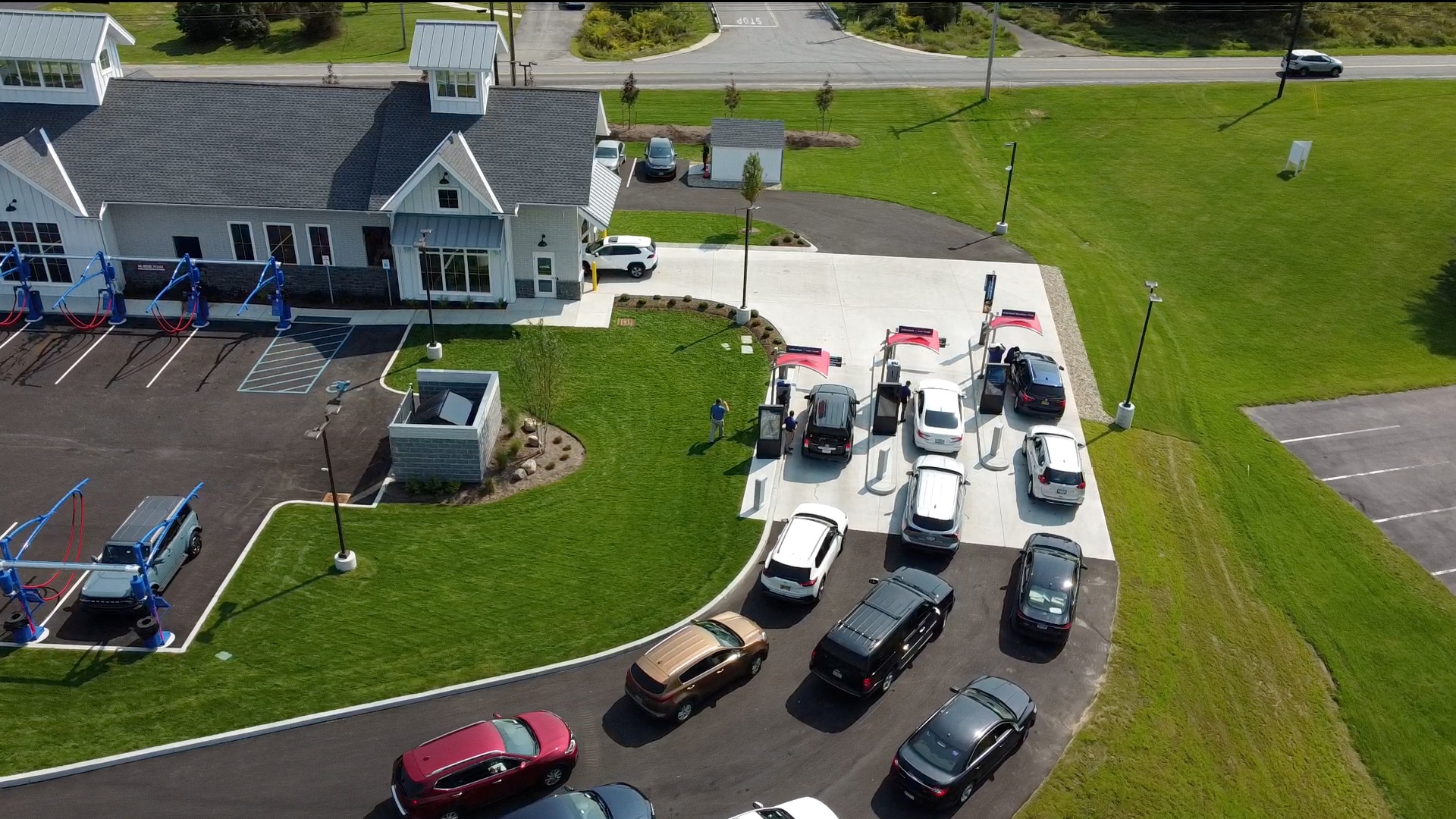
Learn how car wash operators can streamline processes, boost throughput, and deliver a consistent customer experience by improving flow and efficiency.
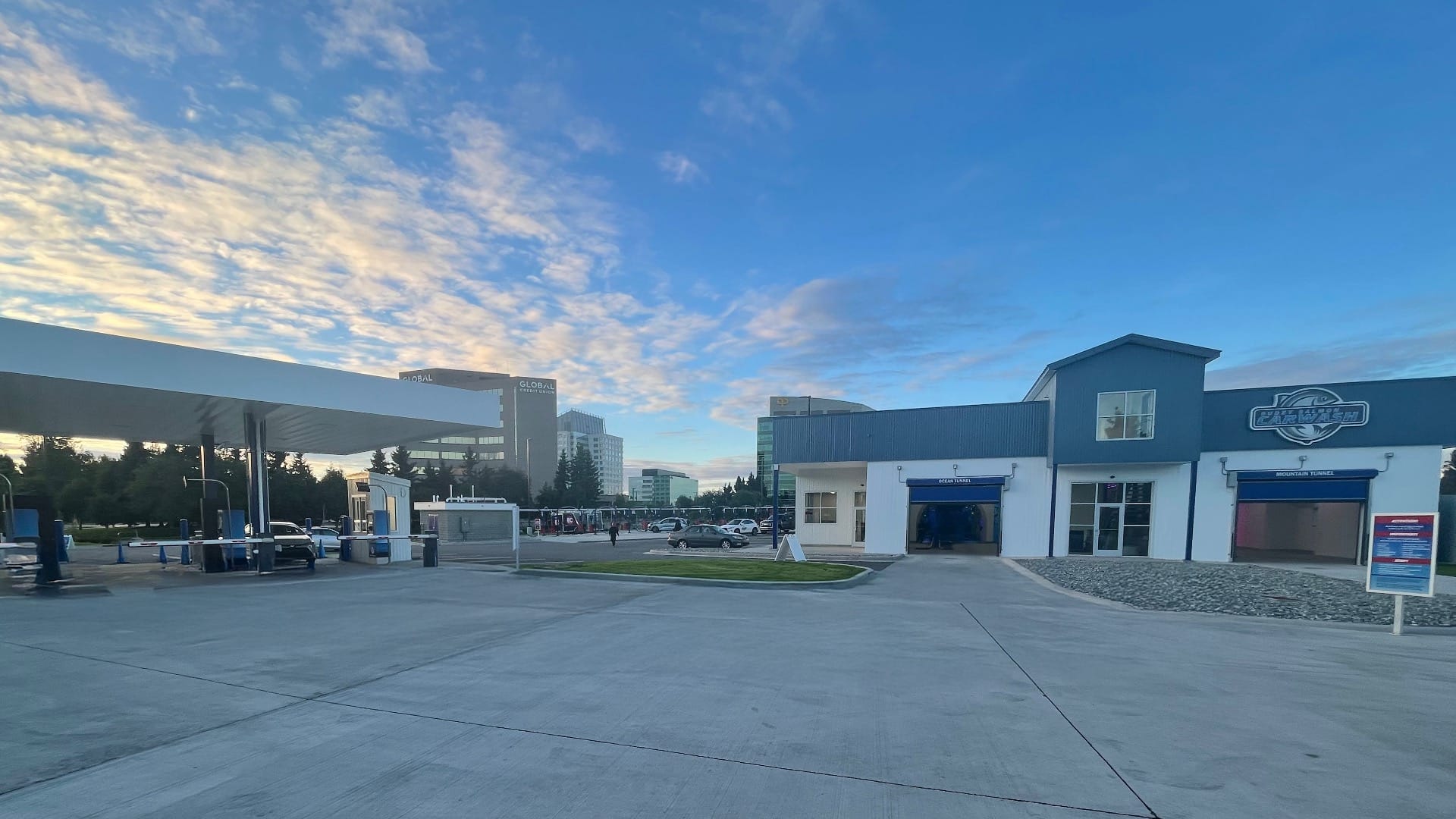
See how Sudzy Salmon in Anchorage optimized a fixed-layout tunnel to go fully prep-less, hit 300+ cars/hour, and boost memberships.
REQUEST A QUOTE
Interested in using our waterjet cutting services? Complete the form to request more information.
Chemical Delivery System
Water Treatment System
Spot-Free Rinse System
High-Pressure Pump Station
Conveyor Hydraulic Unit