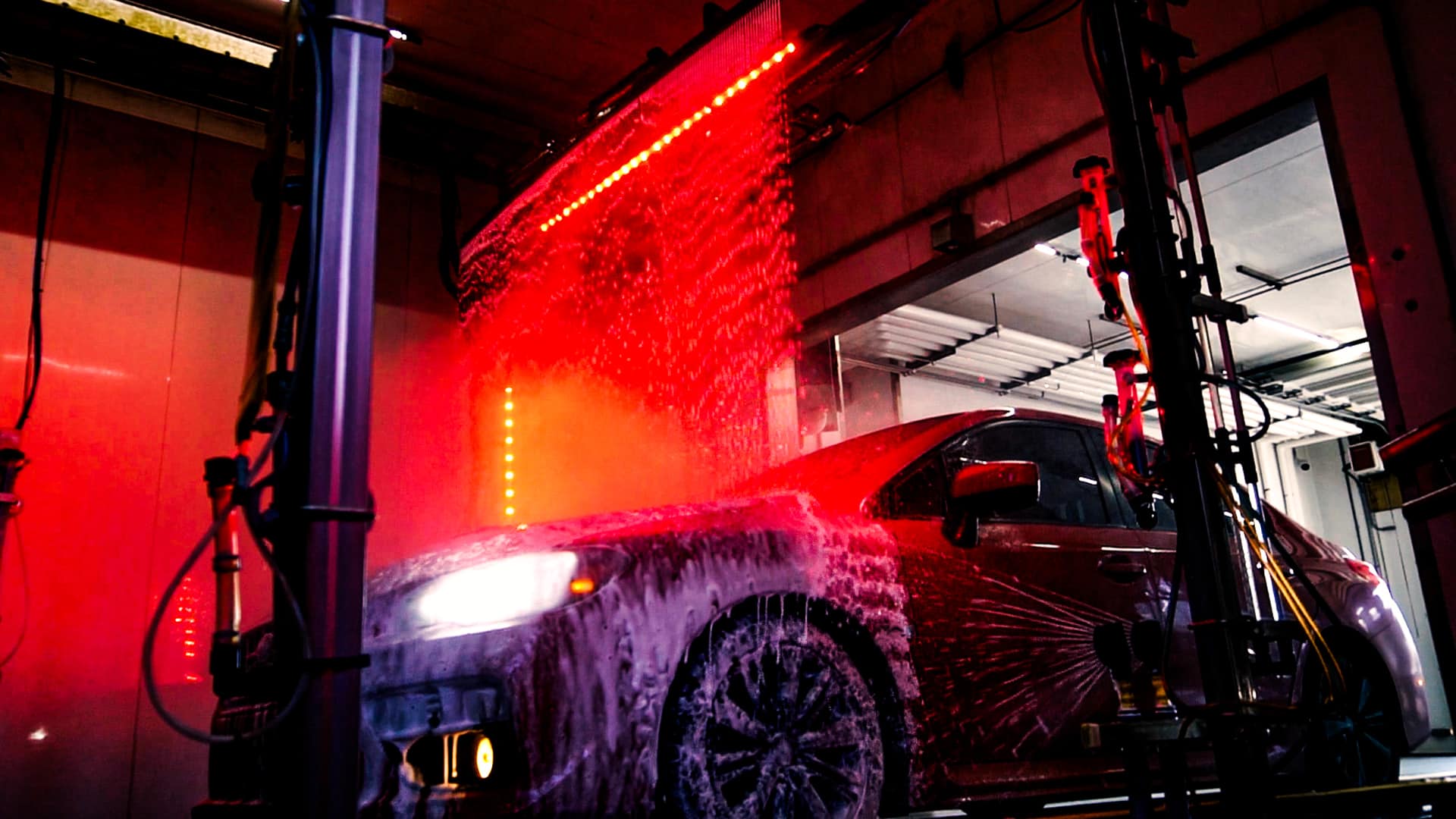
Why Chemical Delivery Is Critical to Consistent Wash Quality
Customers evaluate wash quality from inside the car, but inconsistent results often stem from how chemistry is delivered under real operating conditions.

Technical Innovation Manager, Simoniz
In this episode of Ask the Expert, we sit down with Chris Bossa, Technical Innovation Manager at Simoniz, to discuss what actually drives car wash performance and cost.
Chris shares insights from working across both equipment and chemistry, breaking down how water quality, chemical application, and system design all work together to impact wash results, efficiency, and cost per car.
From common misconceptions about chemical usage to the role of emerging technologies like nanobubbles, this conversation explores how operators can think more holistically about their wash and build systems that deliver cleaner cars while controlling costs.
Chris Bossa is the Technical Innovation Manager at Simoniz, where he focuses on advancing chemical systems, water treatment, and emerging technologies for the car wash industry.
With a background in car wash equipment, project management, and site development, Chris brings a unique perspective that bridges both the equipment and chemistry sides of the business. His work centers on helping operators improve wash performance, optimize chemical usage, and build more efficient, cost-effective systems.
Below is the full transcript of this Ask the Expert interview with Chris Bossa.
Dan (00:01.201)
All right, Chris, well, thank you so much for joining. I think it’s probably fair to say that anybody watching this is gonna be pretty aware of Simon Eyes and what you guys do. But to start us off, why don’t you give us a little bit of your background and how you got to where you are now and what you have going on with Simoniz today.
Chris Bossa (00:16.526)
Sure, appreciate the introduction. So my name is Chris Bossa. I’m with Simoniz. I’m currently the manager for innovation and technology for the car wash division. My background originally prior to joining Simoniz was project management and car wash installation. Dealt heavily on the equipment side as well as the build outs of the structures. So in my career path now I have landed with Simoniz doing the chemical side which has proven to open up even more doors now having the background in the equipment side. So here I am.
Dan (00:57.117)
A little bit everything then. So let’s jump into the chemical side first. And you know, when we’re talking about that, when operators are thinking about wash quality, chemical is obviously fundamental to that. What role do chemicals really play in the overall results and where do chemicals fit sort of relative to equipment and process itself?
Chris Bossa (01:19.575)
So people mistake the overlap between the equipment and the chemical. The chemical actually is almost separate from some of the equipment in a respect, but I think if we go one more step further to the forefront of water. A lot of people overstep water and the importance of clean, good water and how that impacts not only your wash quality, but your chemical, your chemical usage, your cost per car based on that as well as longevity of your friction equipment or even your touch free equipment. with chemistry, you have your high pH, your low pH, you have your sealers, your drying agents, your tire shines. There’s all these different added services, upgrades, as well as the basics. So maybe if we start with the basics, our pre soaks, your high and your low pHs. What are those made of?
Very important, you have your surfactants, you solvents, have your builders, your chelating agents, know, there’s a robust chemical makeup within that. And I’m not a chemical engineer. We have a great team of guys that are way smarter than I am with fancy degrees that, you how to, you know, how to put these all together. So we’re able to, you know, take the field experience and go to them and say, Hey, we’re having challenges here, or maybe we’re having challenges in different parts of the country, different parts of the world, and they were able to provide solutions. And from there, you know, that compounds into where to properly put your chemistry, how to properly balance your car and the car chemistry throughout, as well as, you know, a proper rinse, get a neutral surface, a dry surface up until your sealants, your drying agents, final rinses, and then into, you your drying. Because what does everybody want? Everybody wants a clean, dry, shiny car. So how do we achieve that? And, you know, I think just like you said, it’s, it’s chemical, it’s water and it’s equipment. So now what’s the right equipment? And that’s the million dollar question everybody has, right? How much equipment is it too much equipment? How do I jam all this equipment into a small tunnel or an in-bay automatic? How do I run it faster? Cause at the end of the day, what does everybody want? They all want to make money as business owners and you know, what is that magic formula between your water usage and water cost, your chemical usage and your chemical cost, and then your equipment and your equipment maintenance.
Dan (03:53.63)
So, I mean, you list there, if we talk, you’re looking at those categories, you’re looking at your chemicals, you’re looking at your water, you’re looking at your equipment. Where or what are some of the common mistakes you see operators make in any of those three areas or all of those three areas that lead to either issues down the line in terms of equipment going down or in terms of overall wash quality? What are some common mistakes that you see that are relatively easily avoidable that you come across consistently?
Chris Bossa (04:21.718)
Sure. Well, in terms of mistakes, I don’t know necessarily that they’re mistakes. Maybe the operators are misinformed. Where in terms of mistakes, it would be paying attention to maintenance. Is it working? Is it not working? And if it’s not working, what impact does that have? In a tunnel, for instance, there’s multiple pieces of equipment, different arches. That’s a long tunnel. You can kind of get away with maybe potentially having a piece of friction equipment broken you can shut it off for a few days until you can fix it But yet still run your cars in bay automatic a little bit different because every application plays a role as well as it’s multi-used You know within the wash package itself The misconception I think a lot of operators have is again how important it is to have properly tuned and running equipment as well as you know good water as well as you know balanced chemical. Using more chemical doesn’t always equate to a better car or a cleaner car. It can actually pose opposite where if you use more chemical, you’re actually gonna put a film on your vehicle and it’s not gonna come out as clean and you’re just gonna be wasting your money.
Dan (05:38.11)
Obviously, think operators, for the most part, understand least a little bit about chemicals and what, you know, especially from the chemical delivery standpoint, what they’re trying to accomplish. When you’re looking at things like dilution ratio and delivery, how important is that getting, to get that dialed in when it comes to chemical performance and quality as well that you’re seeing on the other side?
Chris Bossa (06:02.058)
So pre soaks which would be your initial stage your initial cleaning the chemical makeup of the pre soak is very important whether that be high pH low pH and then you know, there’s a large discussion of Do you put low pH on then high pH high pH and low pH is it for friction is it for? In bay automatic touchless. So there’s there’s theories on that that everybody has bought.
The important part is that outside of the dilution ratio, the water plays the very important part, dry part of that concept, as well as its titration. So titration is where you want to go with your pre soaks. the catchphrase these days is super concentrate, hyper concentrate, concentrate, concentrate, concentrate. One to a thousand, one to two thousand, you know, all these great things, right? And then you look at, okay, well, how are we applying this to the vehicle? What are we putting it on with as well as how fast is your chain speed? So are you applying your pre soaks appropriately or are you over aerating or over atomizing where you’re not getting the surfactant as a proper build onto the vehicle surface just because it foams doesn’t mean it’s cleaning. And that’s a big misconception. Everybody thinks more foam, more cleaning. That’s not the way it works. The foam is actually a carrier for the heartbeat of the chemical and the pre-soaks, is really your surfactants, cleaning agents. So dwell time is key as well as water is key because let’s take high pH for instance, a high pH pre-soak that’s mixed with a high grains per gallon water solution is actually not going to clean as well as if you had more of a neutral or zero grains per gallon, zero hardness in the water solution. So just as important as your titration is, the application of how it’s applied to the vehicle is just as important as well as your dwell time because the chemical has to be able to react to whatever’s on the surface. And again, based on your high pH and your low pH in your titration of the efficacy or how strong the chemical is, what is it doing to the surface? Now, typically, you apply your low pH prior to your high pH because the low pH is harder to put through the high pH. the high pH kind of will neutralize or what it does is actually create an exothermic reaction that kind of heats, which then lifts a lot of the oils, bug residues. There’s different reasons why you use high low pH, your biofilms, your roadfilms
with the high pH and the low pH. The titration is what is very key on that and not so much your dilutions, you know, how much you’re using. But again, if you really want to dig down into it, start with your water. Water is the most important. Start with your water and titrate your pre-soaks. The dilution ratios is kind of just a big fugazi at this point.
Dan (09:16.426)
So I’m going to touch, you talked about dwell time and something I want to touch on because I know a lot of people are moving to smaller and smaller tunnels as land becomes kind of harder to come across here and it’s tougher to build, you know, the large 180 foot, 200, whatever it was going to be. How important is it then to be considering chemical dwell time when you’re laying out your tunnels? I think, you know, there might be people who their initial assumption or their initial plan is going to be, me throw as much high pressure, as much friction in this space as I can, because that’s what’s going to get it clean when really you’re talking about what you’re really doing now is reducing the efficacy of your chemicals because now half the time you’re washing it off before it’s even had a chance to properly dwell and actually apply to the car. So how important is that when you’re laying out your site to be considering where your chemical applications are?
Chris Bossa (10:02.952)
So layout is very important and it starts with the machine layout or the applicator layout within the tunnel. Fortunately, again, working for Simon Eyes, we have over 8,000 SKU numbers. So we have a big library of chemicals to pick from. So having that being said, we can adjust and modify our chemical program for anybody’s car wash based on.
The way that their equipment is set up as well as the way that their water is set up. What I’ve seen just from installing car washes is that everybody’s very focused on, you know, when the equipment’s going in, when the building’s going to be done, when we’re going to get the certificate of occupancy. But nobody ever took a water sample prior to sticking a shovel in the ground and saying, do I have enough water? Is the town going to let me use all this water? How much water do I really need? And what does the water look like?
So, you know, that play again plays a big part because if you’re not rinsing, just as important as putting the chemical on, rinsing the chemical off and rinsing the biofilms and the roadfilms and the bugs and, know, this time of the year with winter, you got your calcium and your magnesium chlorates that are, you know, used as the magic salts on the roads. So it’s a big kind of mathematical formula of how do you get to that end result. to go back to how important it is on the layout, we can modify and we can adapt. The dwell time obviously is ideal. However, with friction, there’s different ways that we can modify the chemical structure to apply onto the friction equipment, which not only cleans, but provides that lubricity so you don’t get the swirl marks and all the negative PR that tunnel washes get these days about causing damage to vehicles. But again, it still needs time. So if you’re running your belt speeds so fast that the cars are flying through your friction and they don’t have enough time to really agitate and dwell, sometimes we can modify it chemically, but sometimes it means maybe slowing the belt down. mean, the equipment’s only made to go so fast.
But there’s been a lot of kind of innovation in the equipment side of the world these days that allows for those faster chain speeds, for the faster wrap speeds with the friction, which again, we’ve modified our chemical structure to our chemical formulas to account for that.
Dan (12:45.982)
So let’s stay on the topic of site planning, obviously, because you’ve been involved on that side of it too. What are some other things, you mean you talk about, okay, have you even checked the quality of this water, which seems like that would be the first place you would go, but it’s easy to understand how that would be overlooked in the process of like, I just want to get this building up and running, get this thing going. What are some other things that you see that are often overlooked by either operators when they’re looking to build or architects or contractors or GCs, is there other things in there that you often see are overlooked when someone’s establishing a new site?
Chris Bossa (13:18.407)
Well, I think equipment room space would jump out as number one. You know, how are going to fit all this stuff in an equipment room as well as even the tunnel? You know, I know everybody has the the working windows or the areas that the equipment should be put in. Everybody likes to draw these fancy pictures. But in the real world, when you start bolting things down to the ground and you’re watching the top wheels come down and the wraps go out and cars go through and, you know, rollers or conveyor belts, you know, is it laid out appropriately or did someone sell you a whole bunch of equipment that just got smashed into a small box? You know, there’s always that it looks good on paper, but you know, what’s it really doing on the job site? You know, how many times I’ve seen 100, 120 foot tunnels and then you get there and go to measure it out and the concrete measures at 93 feet or 97 feet and it’s okay. Not only how do I equate for 17 to 25 feet of less space to put the equipment in, but how are going to modify the track or how are we going to modify the belt or what does that do for the whole environment? And then into the back room, it’s okay. So what is the water that’s being provided? How much water is being required? What happens if you have three, four, five cars in the tunnel and everything’s ramped out, ready to go? High pressure tanks are trying to fill at 50, 60 gallons per minute.
You know, is it a two inch pipe? Is it a four inch pipe? Is it 50 foot run, 100 foot run? So it was a big hydraulics calculation that kind of needs to be done, but seems to always fall short a little bit. But I think to kind of the original question, a lot of the oversight also is the maintenance of things. You know, everybody wants to do it cheaper and faster, but that doesn’t always equate to cheaper in the long run.
So with taking the water samples, are you better off putting in a water softener now or finding out, you know, a month after open after you’ve had your, you know, your kind of grand preview, then you’re going, I can’t get a dry car. Well, yeah, because you have hard water or I can’t get stuff to foam. You have hard water. Now they got to put a softener in. Now it’s an added cost. Where do you put it? Nobody counted for, you know, the footprint of a water softener going in or a reclaim.
Reclaim’s a big, at least in the Northeast, is a big conversation these days, especially for getting initial permitting. know, did the tanks that were put in equate for the overturn? Is the filtration system able to keep up with the demand of the car wash as well as the demand of filtering the water for the car wash? So there’s a lot of different moving pieces. What works for one person might not work for another site. Even guys that are multi-site.
Owners, what works for one site might not work for another site. And you just got to figure that out.
Dan (16:20.287)
You know, and that’s the point you make about the initial savings. I think that’s that speaks to, know, for us on the equipment side as well. I think it’s easy to say, here’s an initial savings for me without doing like you’re saying the legwork of what does this mean in the long run? Because a lot of times when you’re looking at cheaper equipment options or cheaper options within your wash.
Most of the time that’s going to mean it’s going to be more expensive down the road. So really building that out to understand what will this actually save me in the long term instead of just getting open to get up and going. I think that’s, you know, it’s something always worth considering. So, I mean, when you, when you go to a site where there, where a car wash is being planned, are there certain characteristics that you say, okay, I’m excited about this site or it has strong potential or certain characteristics when you’re defining just before everything is laid out? Yes, this makes sense for a car wash itself.
Chris Bossa (17:10.085)
I mean, I’m just the chemical guy. So, you know, in terms of the equipment and the layouts, but if someone’s willing to have a conversation, open, an open ear conversation about things, I love to be able to go through and make suggestions or be able to provide solutions as well as, you know, the relationships that Simoniz has with equipment manufacturers and other industry leaders to be able to confidently suggest or propose certain solutions makes it a lot easier for us. And, you know, like I usually say to guys, like, one plus one will always equal two. So a lot of this is our basic math problems. You know, how many gallons of fresh water are you using? How many gallons of reclaimed water are you using? You how many gallons of soap are we using? How many cars are we projecting? So we can kind of go through and forecast some of these things if, you know, site owners are willing to sit down and kind of have that quick conversation. you know, a lot of these guys are building them faster than they can, you know, sign the documents sometimes. So it’s a fast paced world as well as everybody wants it done tomorrow. You the longer you’re closed, the more revenue you’re losing. So you want to get open. But you also don’t want to be closed because of oversight and putting out a bad product or a bad car or that your equipment’s breaking because somebody overlooked a certain, you know, a certain issue. And I think one of the things too, and just talking to guys that have been doing it 20, 30 plus years is most car washes are washing an exceptional volume of cars these days. You know, the equipment years ago was kind of built for 40,000, 50,000 cars a year. Now guys are doing that in a month. So there’s a lot more maintenance that needs to be involved. And that’s also what we’ve taken a look at at Simon Eyes is developing our chemicals for that mindset as well. as the car wash or the need for the ability to wash more cars has come into play, which means they want to do it faster. Modifying our formulas and working with chemical or working with manufacturers of equipment to align some of our chemical with that, as well as how do we make the water better outside of just mechanically filtering it? Are there ways that we can chemically modify the water or enhance the water? Or we came up with our nanobubble program, which has gained great traction and reputation over the last year.
We continue to look for strategies and technologies in conjunction with our relationships with equipment manufacturers and even installers, distributors all across our networks to continue to provide the top solution for our customers.
Dan (20:17.375)
So I mean, you touched on reclaim there. I want to go back to that. Obviously, there is a bigger and bigger push now when you’re building new car washes from municipalities, from local governments, the requirements to have reclaim. Obviously, being in the Northeast, it’s a big part of what we do here. So where are you seeing reclaim water make the most sense for use in a wash? How have you seen that used? And what do you think the best applications for reclaim is when using it in the wash?
Chris Bossa (20:45.699)
So kind of a broad question because we have to go back and look at what does the operator want to do? What’s the operator willing to invest into and kind of what’s the short term and long term, you know, gains for the operator. Reclaim water right now for some of my top customers, they’re using it on everything, including chemical, except for final rinse.
And final rinse could be an final rinse could even be, you know, a nanobubble infused rain bar with street water. So every site is different. It always starts with taking a water sample, seeing what’s in the water, you know, what potentially is going to cause issues, whether it be for chemical or rinse or equipment, and then aligning it with a chemical program. And then again, it’s kind of a math equation of how much reclaimed water can we filter based on the current setup? Do we need to upgrade it or can we upgrade the current setup? What does that look like? How many tanks do they have? How big are the tanks? How many cars are they washing? Because even though the water’s coming out as reclaimed water, you still have to be able to filter the water prior to reusing it. So a lot of the mechanical side of the reclaim tanks is they want to settle or gravitationally settle the sediment as it goes through. But if you’re pushing the water through too fast, then you’re not able to gravitationally settle that turbidity out of the tanks. So again, are the tanks big enough? How fast can we mechanically filter it through some sort of filtration system? Is the filtration system the right system?
Based on the water sample and then you know are the chemicals aligned and balanced because a Lot of people skip over looking at the chemicals. They think chemicals are just cleaners cleaner You know chemicals are chemicals every chemicals the same and that’s not really the case You can have different surfactants you get the congealing you get that gum that kind of gum residue that goes on there you get clogged nozzles and you know then that translates into anaerobic, aerobic bacteria. So you walk into some of these tunnels and they kind of smell like rotten egg. They smell a certain way. That’s from the bad bacteria growth. So you have to balance everything. And again, just a big math equation. So how much water are we putting on the car? How much water are we taking out to reclaim? Are we reclaiming the water fast enough to put back in? Can we chemically modify the filtration system in order to clean more water faster to use. And then, you know, downstream is that water or reclaimed water good enough to mix with chemical? Is it good enough to rinse on the car? Um, traveling all over the country, everybody uses it for an under undercarriage and they use it for, you know, anything lower than the glass on the side doors. And, you know, they’re putting it on high pressure and they’re almost doing themselves a disservice because you’re really just throwing dirty water back on the car. And a lot of it, it’s, you know, the sewer fees or, you know, is it a closed loop system? Is it, you know, a sewer bound system? The closed loop systems obviously pose a challenge because you have to recycle that water over and over and over without overfilling and then having to pump out because of that extra cost of pumping out. So can we filter the water appropriately and fast enough so that the car wash can continue to use that same gallon of water over and over and over. Kind of like a big fish tank, basically. Eventually you have to add water, take water out, filter water, change the filtration. There’s kind of a whole maintenance side of things. But in terms of the Reclaim Water with our Rx line, which is our Reclaim line, some of the other products that we’re offering, some of the other products that with our Nano Bubbles we’ve now launched, I mean, we’re able to offer most car washes, know, 96 to 97 % reclamation water and using a minimal amount of fresh water or RO water as a final rinse for the vehicles and still getting great quality.
Dan (25:24.576)
So think we’d be remiss if we didn’t dive into the topics of nanobubbles a little more. Obviously, I think that’s been kind of one of the bigger developments in the industry. You see it popping around a lot. It kind of ends up being a buzzword. think a lot of people kind of understand conceptually what it’s doing. But if you can give everybody kind of the simplest definition or explanation of what exactly is a nanobubbler doing, what is the purpose of nanobubbles, and what are they? What is that doing for me?
Chris Bossa (25:53.6)
So nanobubbles as a scientific definition are ultra small gas bubbles 200 nanometers in size to relate that it would be basically smaller than like a grain of sand So very very very very small. I can’t see it with the naked eye What where their ROI comes into is that they are ultra condensed gas bubbles where their surface area has what they call a zeta potential. So they stay suspended in the water column rather than like typical air bubbles that come up and pop. And where that becomes a value is that it’s able to increase the ORP and the dissolved oxygen within the water column. So it’s basically making the water itself healthier to simplify what it is. But in stabilizing the water molecule, it actually provides for a covalent bond or a secondary bond onto the H2O molecule. So it’s harder for any sort of dirt, oil, surfactant, to penetrate into that purified kind of water molecule. And then what we’ve been able to do is develop this with our chemical lines, but also with a company called Chemical Reduction Solutions, that we’ve created a hydrodynamic cavitation device that also electromechanically ionizes the water, single pass. So…
What that does is it basically negative ionically charges the water as well as expands and collapse the water molecule providing these nanobubbles, very, very small in the billions and millions of volume saturation within the water column, which then we’ve been able to work with our lab and come up with different chemical reactions basically that we can use with pre-soaks, drying agents, water rinses, reclaim and reclaim cleaners. So it’s really enhanced the solutions that we’ve been able to make as well as because of the negative ionic charge is it neutralizes the minerals. So if you have hard water, actually, it doesn’t filter anything. It basically neutralizes. So it’s almost like a magnet or a battery plus or the minus. So it’s still kind of out there, you know, in the water, but it’s not going to attract or magnetize to any sort of surface, which is great. So we’ve seen great results with injector longevity and injectors not fouling and failing, which, you know, provides for consistent chemical pulls from the, from the, those, nozzles, not clogging, especially high pressure nozzles for replacing reclaimed water typically being a little bit dirtier and not fully filtered. So now having the ionization with the nanobubbles does that. But one of the biggest things is it removes the surface tension within the water column as well. So the solutions like your drying agent, ceramics, your carbonites are now fully homogenized inside that small tube that goes out to the tunnel. Whereas before you kind of had probably a little bit of a chemical, know, because the viscosity, you know, it sits all kind of funky, then you hit it with air and it’s blown apart and all that. So now you’re able to get a full solution onto the vehicle surface. And by that being able to lay, when you add, you know, activate it with your final rinses, you’re actually getting a better sheeting. You’re getting a dryer card. Now you’re not going into the dryers with as much contact water on the vehicle surface as less static water on the surface, which is now you’re not blowing off two gallons on the car, you might be blowing up a half a gallon. So it doesn’t require more dryers. The cars are a lot drier coming out. And then to the chemical side with the pre-soaks, the pre-soaks, the alkalines actually get excited to the point where they foam more. And by doing that now, you can remove some of the anionic agents that people tend to look for because the anionic agents foam better, but those are also the ones that are the biggest offenders for reclaim where they create more bacteria. So, you know, it’s a big environment circle of, again, back to kind of your math equation of, you know, where can we put them? How do we do it? And then, you know, what’s the value, the return value, not only to the customer, but, you know, on the maintenance side and things like that.
Dan (30:46.304)
So what does that integration process look like right now? So you’re talking about reclaim, obviously chemical dispensing as well. How and where are you primarily putting these nanobubblers and what does that look like if an operator was looking to add that to their current setup?
Chris Bossa (31:01.917)
So we’re putting them everywhere. So they don’t require electricity. They don’t require a lot of plumbing work. They’re very easy to install. No maintenance. There’s no filtration. mean, it’s a tube that gets put in. It gets flow math based on the application. We have them in in-bay automatics, touch-free and friction. We have them on RO systems. We have them on chemical injection systems, hydrominer, ,we can put them anywhere. We put them on shower heads and houses. We can put them, you know, I have three of them on my house. I have hard water. I don’t need a water softener anymore. So there’s a lot of value in what it was. And it took a lot of research and it took a lot of testing and field testing and engineering to get this product to where it needed to be. And now we’re in the second phase of diving into with the nano bubbles, the cohesiveness of combining that with chemical and modifying the chemical to get better returns and even better shinier cars than we were getting before. Because of the reduction in surface area, we’ve been able to scale back the amount of water used per car, which is a huge value to everybody in the environment and especially going in front of some of these boards to get permitting that we’re kind of changing the game now with what is the standard or the norm for not only how much reclaim water you can use per car, but also how much fresh water is required to properly rinse and chemically application per car. And one of the great products that we’ve paired up with is an innovative dispenser that does a great job while staying in this. We put the nanobubblers on there right after the Grundfos pump and we’ve had great, great, great results with that thorough breaking reduction in final rinses, I to the point of reducing some of these RO rinses in half. So just it’s been very positive and our customers have agreed with us and we just keep on pushing the boundary of where this can take us.
Dan (33:21.733)
So for the quantifiables then for, know, someone putting in a nano-bubbler saying, where can I expect to see results beyond just saying there’s going to be part of it that’s just going to be visual and me saying the cars look different than they did before. And I think part of that’s just experience of understanding what your cars look like when you’ve been producing them. But you touched on it. mean, you know, water usage, chemical usage, odor, those sort of things are there, which odor I guess is hard to qualify or quantify. But what are the sort of immediate measurables that an operator could look at and say, here is the impact this is having on my bottom line.
Chris Bossa (33:59.708)
Well, in terms of the bottom line, that’s for the operator to decide. They obviously don’t share their P &Ls with us. But that being said, one of the questions always is, all right, how long until this pays for itself? Well, that’s a bigger question, That’s like saying a cost per car, right? Cost per car. it’s 30 cents cost per car. Well, is that a blended average? What are you putting in it? How many chemicals? How many arches? Does that include tire shine?
I mean, there’s so many variables to these catchphrases in the industry. So when we break it down and we look at it, let’s kind of segregate it. You have your aero and your final rinse. That’s kind of a section, finished section of the tunnel. Then you have your drying agents, your ceramics, your graphene, your carbonites, waxes, polishes, that part of the tunnel. The reclaim side of things, which like I said, most people are using undercarriage and just side jets, rocker sprays where with nano bubbles and with our reclaim program of chemicals that we have, we’ve now been able to kind of flip the script on that and been able to use the reclaim water not only more times over because we can filter it and clean it better, but imbalance it. But now we can add it to pre soaks. We can add it to wrap rinses. We can add it to, you know, HP pre soaks, you can put them on the top, you can put it on the side. You know, again, every car wash is a little bit different. We got to look at what’s there. If it’s an older reclaim system, you know, are they using ozone? Are they using, you know, 52550 micron filters? Are they back washing the filters? Are they using the right tanks? Are the tanks actually working? You know, is the ozone working? So conversation is a lot bigger. But what it does is it opens the door for improvement and enhancement at a small investment. It seems like everything in the car wash business these days is $100,000. I’m going do this, $100,000, $100,000. We’re talking $3,000 $4,000 to implement some of these. And again, no electricity, no maintenance, no filters. Set it and forget it. And we’re warranting them up to five years right now. And again, you know, it’s a bigger program than just you put this in and boom, you’re done. But if we want to look at putting them on our dispenseITs we’ve taken out a lot of different hydrominders, Dosatrons, Hydroflexes, gone into the dispenseIT. The dispenseIT does a great job of accurately and consistently integrating chemical and water, you know, through the venturi system and adding the nanobubbles to it. We’re getting better foaming, but additionally to the foaming, it’s dwelling faster. So I think we talked about this, you know, 20, 30 minutes ago where how is that dwell time? Well, now I’m encouraging people to turn their conveyors up because we can get more chemical, not more chemical, but we can get a better solution of chemical with the nanobubbles onto the vehicle surface, enhance the reaction to lift and pull. And because they’re nanomicroscopic bubbles, they’re getting into the pitting of the glasses. They’re getting into all the little crevices, you know, that typically your friction or even some of your soaps wouldn’t have time to get into. And they do act as a natural cleaner because they are carrying that negative ionic charge. So we’re seeing crisper and cleaner glass come out now. Everyone’s like, how’d you get the glass so clean? Everybody thinks, you know, we turned up the ceramic or turned up something, right? No, that’s so so there is a lot of visual to the nano bubbles on the reclaim side.
You would see, you know, there’s different ways that we can test it. Test the pH, test the ORP, test the TDS, the TSS, the EC, there’s different, you know, stuff that I’m still learning through our chemists and whatnot, but there’s different ways that we can show numbers, right? Everybody wants quantifiable, I get it. Or also infusing something into the water that you can’t see. So We’ve done a lot of the testing and have the big fancy certifications that say that these work and these are providing, these are doing, these are making nano bubbles. And that’s all well and good because what does the customer want? Well, I can’t see the nano bubbles. So how do I know if it works? Well, there’s a lot of visual to it, but then ROI, you know, talk to me in 30 days. Did you have to replace your injectors like you normally do? Were you able to turn your water softener off? Are your cars coming out cleaner? You know, to start turning down soaps isn’t something that the chemical guy wants to say. And I could probably, you know, I’m going to get a lot of trouble with the bosses, but we’re able to, we’re able to tweak our, the soap concentrations, you know, so back to our conversation about the pre-soaks with the titrations, the titrations now, we might not have to run them as heavy to break through because we’re now ionizing the water. So again, back to the original conversation of water, how important is water? We’re ionizing, enhancing the water, we’re ionizing, enhancing the chemical, we’re ionizing, enhancing the reclaimed water, we’re using more reclaimed water instead of fresh water. So you can kind of already pick and choose where all the savings are coming from. And one of the biggest savings that quantifiably would be up to the operator is to see how many membranes on like an RO system that they’re not having to replace because the membranes aren’t fouling as fast. One of the products of the nanobubbles is that they kind of provide a protection coating on the inside of the piping because of that charge. So you don’t get all that biofilm buildup like in your tanks, like in your hydro-mited tanks, your high pressure tanks, there’s usually kind of that foam scum or you have that residual congealed carbon MSO product on the side. So with the nanobubbles, you’re not seeing that anymore. Or I’ve had guys with, you know, they go in and they say, oh, it usually takes me 10 hours to jet down my pits and clean them all out. And I got to use this chemical and I got to wear a Tyvek suit and do all this stuff. Now they’re basically using a little bit of hot water and a high pressure spray and a spray from the top on the V-box and boom, boom, boom, boom. And it all comes off because that reduction in surface tension. So, you know, the buildup is a lot slower than it typically was, so they’re not having to clean them out as much. So there’s another savings on the P &L. How many times did you clean out your pits last year? Once a month. Now, the funny part with that metric is if they tell you it’s a monthly schedule, you got to think a little bit because it should be based on the car count, right? Because it’s how much water is going through your system total until basically the water is too dirty to manipulate. But a lot of the operators are looking at how much water they’re using on the undercarriage and the side jets to just kind of discharge and evaporate the water versus and then how much fresh water they’re bringing in. And it’s typically more fresh water than the reclaimed water. So they’re not really looking at the mechanical filtration part of things for the reclaimed water because one, it really has no impact on the quality of the car because they’re kind of just spraying it somewhere where you’re not really going to see anyways, as well as the freshwater is diluting and kind of filtering the reclaimed water. So now pick a site that’s a closed loop system where every gallon matters and not overflow or discharge somewhere else. Chemical, the water, the equipment.
The nanobubbles, everything plays a part in that. So huge ROI on nanobubbles for sites like that. And we’ve done a bunch of sites that are closed loop and have testimonials for that as well.
Dan (42:12.098)
Yeah, I think, you know, I think it’s an important point. You’ve made it several times throughout this conversation that it’s not a magic bullet because there is, I mean, there is no magic bullet in the car wash industry. This is things where you have to be evaluating everything else upstream and downstream from the changes that you’re making because the problem isn’t probably occurring just in one spot. There’s probably more going on there. So, and then a bubbler is not going to solve all your problems if, you know, your infrastructure isn’t right on the other side or all your other upstream and downstream applications before it.
Chris Bossa (42:45.227)
Correct. And that’s why it’s important too for, you know what, we have the relationships we have with distributors, installers, manufacturers, to have that conversation and with the NanoBubble program, you know, to encourage them to make it OEM because it does help them just as much as it helps the chemical guy, as much as it helps the operator. A lot of operators are busy. A lot of car washes are super busy. Maintenance is an oversight for a lot of people, you don’t fix it until it’s broke, where there is no maintenance on the nanobubblizers, but also because of the enhancement that the nanobubbles have for your water, your reclaimed water and your chemical, it causes less fouling of your injectors, it causes less fouling of your nozzles, your rain bars, you’re not getting algae growth. You know, I mean, there’s so many different aspects that I could name what the are, ROI is other than you know, you’re gonna save a dollar. You’re gonna save five dollars. You’re gonna save five thousand dollars because every operation is different and how everybody approaches is different. So they’re kind of going back to you know, I want to provide solutions for people. So when we go into these these washes and if they want to have the conversation if not, I’m okay just being the chemical guy. So but but it’s it’s been a it’s been real eye-opening to be able to travel all over the country and talk with operators and for them to kind of open their doors and have that open conversation or even to say this is how we do it, can we do it better? Which is pretty awesome.
Dan (44:25.516)
I think another important point you made there, I the car wash industry especially, I think you see that it’s not one size fits all. So whether that’s equipment, whether that’s chemical side of things.
No one operator is doing it like another one. So I think it’s important always when you’re evaluating those types of things, chemicals, equipment, all those things to understand that maybe there’s another way of doing it that works for you that doesn’t work for somebody else. And you don’t necessarily want to put yourself in a corner, put yourself in a box of here are my only options. So it’s important to, partners like Simon Eyes, the same way that we do, reach out to those partners, see what they can maybe help you with or do something different for you when there’s variability in these sites, there’s variability in all these washes.
And clearly, you guys are willing to do that and help them out and help them provide the best car possible.
Chris Bossa (45:13.014)
Yeah, and you know, we’re very fortunate. I’m very fortunate to be part of the Simoniz team and I’ve seen a lot of the relationships and the long standing relationships, generations of relationships that we have as a company with not only equipment manufacturers and distributors and clients and operators. So to have the conversations of the operations and for all people to kind of show a little bit of vulnerability in it. You know, with the private equity and the roll ups and, know, I’m not going to show you what I’m doing. And, and, you know, I want to be secretive and, and all that. Um, it’s, it’s been really eye opening to, to at least take that feedback and then be able to, um, you know, go to, go to my bosses and say, Hey, this is what I’m thinking. And this is what, this is what, you know, I think we can excel on or enhance or can we enhance.
You know, can I talk to the chemist and say, hey, this is the challenge that we have out in the Midwest. This is the solution. You know, this is what I’m thinking for a solution. Can we do it? Okay, let’s look at it. You know, let’s form a plan and then, you know, make it actionable. And, know, I’m bad at a thousand right now, but I’m, you know, still working it out. I’m sure I’m going to have some failures and that’s just part of it. So at least we’re trying, you know, and we’re trying to provide the best that we can and status quo is not good enough for me. I want to make sure that we’re exceptional and able to provide exceptional chemical for our customers.
Dan (46:50.178)
Great, so just to kind of end here, because what are you guys, what’s on tap for Simoniz this year? What are you guys looking forward to in the next sort of 12 months, 18 months, or anything coming down the pipeline that you’re excited about?
Chris Bossa (47:01.823)
So we’re full steam with this nanobubble program. We spent about the last, we released it at ICA last year. The mechanical side of the product itself is selling itself at this point. Everybody has confidence that it works and it’s doing what it was doing. Now we’re enhancing that performance with a dedicated chemical lineup for nanobubbles, as well as a dedicated chemical enhancement for reclaim systems.
We already offer our RX products, is great, reclaim friendly, reclaim compatible. But now with the nano bubbles and digging deeper into it, we’re going to be chemically enhancing the reclaim water to filter even better at a lower cost and replacing membranes and whatnot for operators. Second to that, we released our ChemCheck system. Our ChemCheck system is an inventory management system, live updating shows your chemical levels, shows your inventory, shows you your cost per car, shows you how many cars you have left in a drum, shows you if your injector is working or not. I mean, there’s so many upsides to this offering that we have, and it’s taken the better part of the last 18 months to work with the programmers to put this all together and have a robust solution that is not just an AI-generated nonsense product.for our customers, but our customers expect exceptional chemical from us. So any sort of product offering or enhancement offering that we have coming out of my Division of Innovation and Technology, I want to make sure is right on that level. And so this ChemCheck system is phenomenal. We just had it at the Southwest Show, received great feedback. We’re going to have it at ICA. So there’s a dashboard with login, and it’s going to be great.
Just real positive rollouts and our customers have been giving us very positive feedback on these two programs, the NanoBubbles and the ChemCheck system.
Dan (49:03.074)
That’s great, and we look forward to seeing that at the show in May. Well, Chris, thank you so much for your time. I know you’re a busy man, washes don’t stop, but I appreciate the crash course. I think I’m definitely smarter for hearing all you had to say. I think anybody that watches this will walk away feeling a little more confident about their understanding of their chemicals. So thanks again for your time, Chris. Really appreciate it. right, thanks Chris.
Chris Bossa (49:21.076)
Appreciate it.
Customers evaluate wash quality from inside the car, but inconsistent results often stem from how chemistry is delivered under real operating conditions.
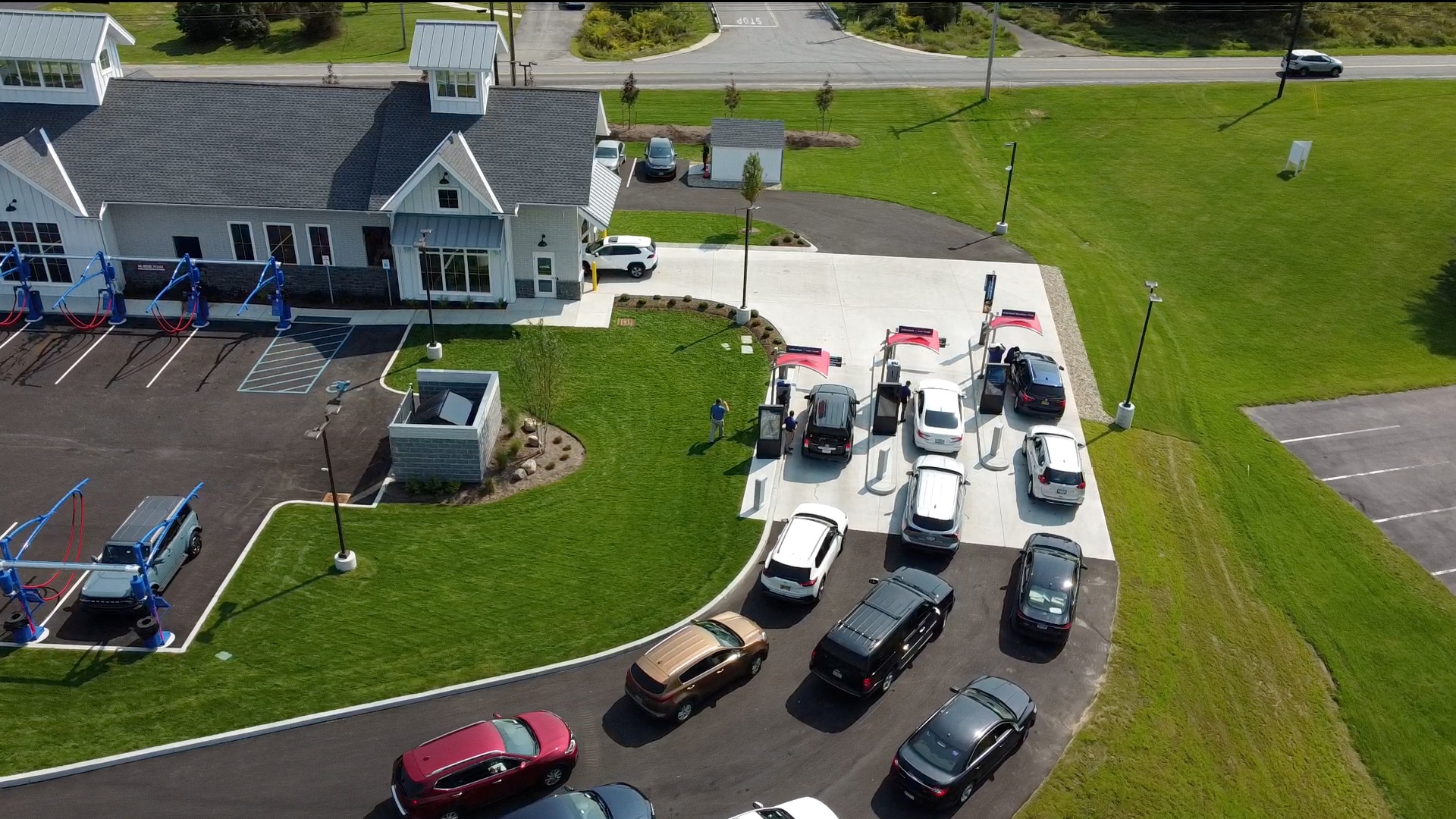
Learn how car wash operators can streamline processes, boost throughput, and deliver a consistent customer experience by improving flow and efficiency.
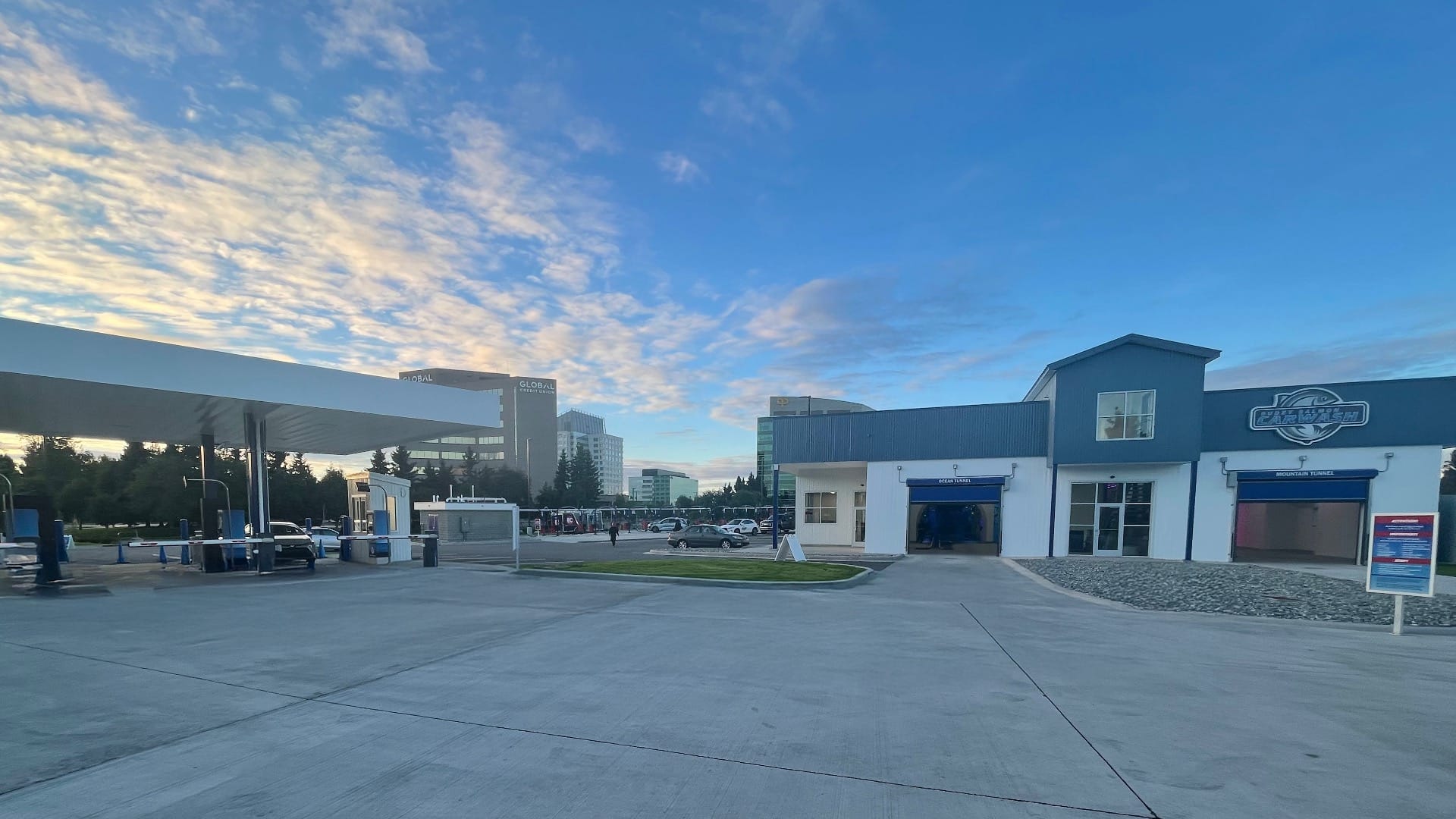
See how Sudzy Salmon in Anchorage optimized a fixed-layout tunnel to go fully prep-less, hit 300+ cars/hour, and boost memberships.
Chemical Delivery System
Water Treatment System
Spot-Free Rinse System
High-Pressure Pump Station
Conveyor Hydraulic Unit
We use cookies to personalize content, provide social media features, and analyze our traffic. We also share information about your use of our site with our analytics partners. You can change your preferences at any time. For more information, please see our Privacy Policy and Cookie Policy. Privacy Policy Cookie Policy
REQUEST A QUOTE
Interested in using our waterjet cutting services? Complete the form to request more information.