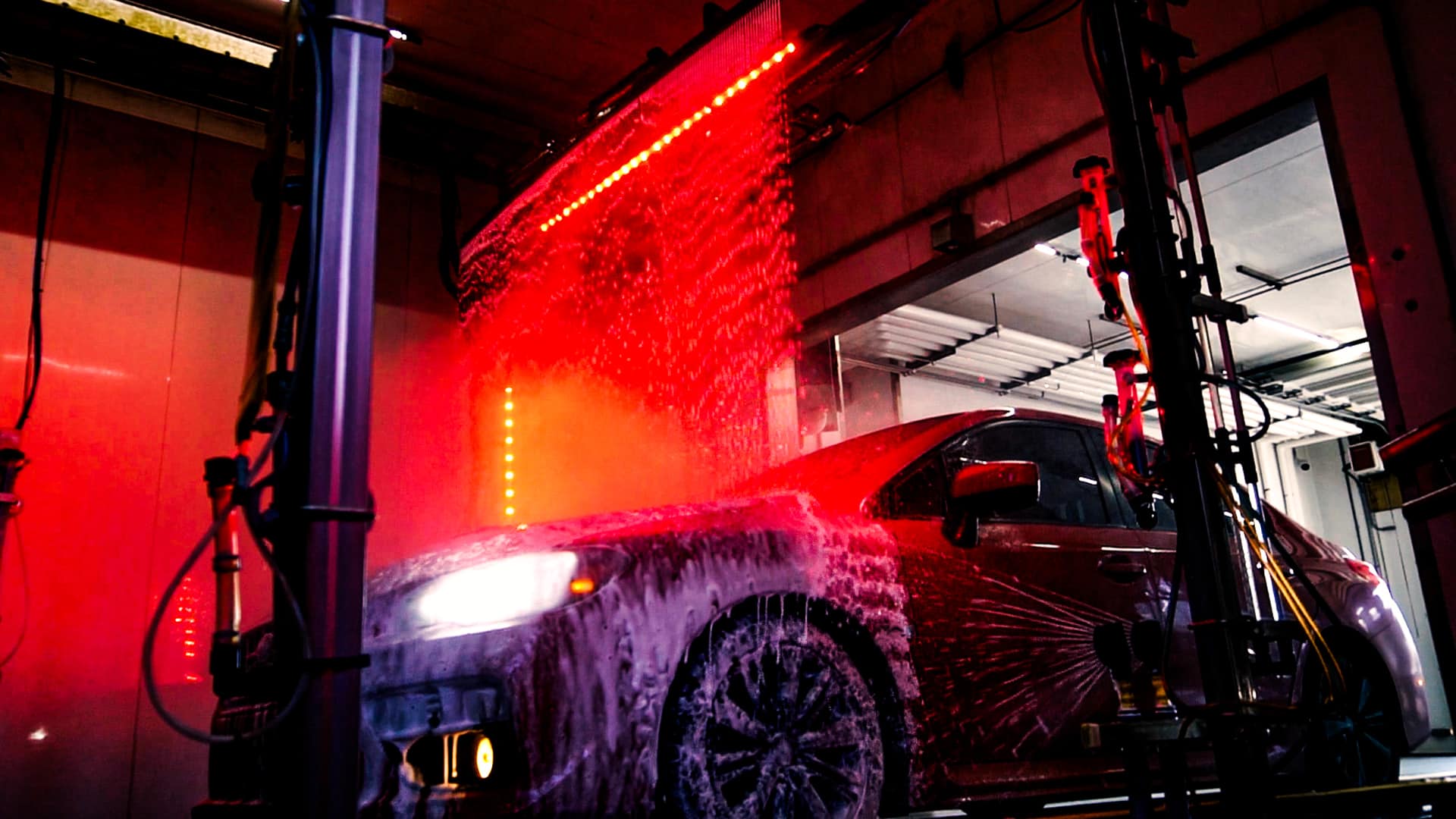
Why Chemical Delivery Is Critical to Consistent Wash Quality
Customers evaluate wash quality from inside the car, but inconsistent results often stem from how chemistry is delivered under real operating conditions.

Operations Director, Sudzy Salmon (Alaska)
In this episode of Ask the Expert, we sit down with Shane Robb, Operations Director at Sudzy Salmon in Alaska, to discuss what it takes to operate high-performing express tunnel car washes in one of the toughest climates in the industry.
Shane shares insights from operating multiple locations in Alaska, including how extreme weather impacts equipment durability, maintenance routines, and overall wash performance.
From stainless steel equipment to operational consistency and tunnel checks, this conversation explores how operators can build reliable systems that allow teams to focus on delivering a great customer experience.
Running express tunnel car washes in extreme climates
Why stainless steel equipment matters in northern environments
Preventative maintenance and tunnel inspection routines
The importance of operational consistency
Equipment reliability and customer experience
Managing car wash performance across multiple locations
Shane Robb is the Operations Director at Sudzy Salmon, an express car wash operator based in Alaska. Shane oversees daily operations across multiple locations, focusing on wash quality, equipment reliability, and customer experience in one of the most demanding climates in the industry.
Below is the full transcript of this Ask the Expert interview with Shane Robb.
Dan (00:01.273)
Alright well Shane thanks so much for joining us. I guess you know the obviously kind of the I think the most obvious place to start here is if you could just start by walking us through your background and how you ended up you know at Sudsy Salmon where you are now.
Shane (00:16.142)
Absolutely. I started my career down in Arizona, originally from Alaska, and moved down there to go to school and picked a job up across the street from my apartment while in college and decided I really liked car washing. So spent a couple years as a CSA, really worked on sales there. Then the company started investing in me, gave me some management training, some leadership training, maintenance training, and got to run a sales team. Did pretty good job at that.
And then as the company started expanding, a new site opened up. They gave me the manager in the spot for that. I did that for a couple of years. And then successful in that position. And I was training some other sites and helping to do some grand openings. So then I got kicked down to Southern Arizona. I got to be a district manager for a couple of years. And then during that time frame, we got bought out by a larger company. And they had some spaces across the rest of the country.
I got shipped over to New England and worked out there for a year. And then from there I got moved on to the Midwest and worked there for a year. And then I decided I wanted to come back home where I was originally from and after moving for different states in four years and popped up to Alaska. And now I’ve been with Sudsy Salmon for the last three years.
Dan (01:33.661)
That’s great a lot of chance there you’ve I mean then you had a chance to move across car washes and all the climates too So you had pretty good exposure there? Geographically at least in terms of the different challenges that you see in those different areas and I think we’ll circle back to that in a little bit but if you could also
just give people who are watching us sense they may not know exactly sort of the structure of Sudzy Salmon and how many locations you have, what those sites look like, and just kind of give them a lay of land for Sudzy as well.
Shane (02:01.198)
Absolutely. we have six locations up here in Alaska. have all of them are express tunnels. Some of are on the smaller side, not small, small, 90 foot tunnels. And then we have them ranging all the way up to our midtown location, which is a double tunnel that is 180 feet of washing area in each one of those tunnels. This is one of the largest ones in the nation.
Dan (02:30.858)
So when you look at these sites, think, what is it, from your perspective, what does it take to consistently run a high-performing wash, and especially when you’re looking at cross-locations? So how do you consistently perform, and how do you repeat that across those locations? What kind of things do you see that help in that process?
Shane (02:50.488)
So, I mean, just what you said, it’s consistency. It’s doing the same things day in and day out, having the checklist, doing our tunnel checks constantly. So in my position, I’m able to see a car wash once a week, sometimes twice a week, and I’m gonna go and do checks every time that I’m there. In a manager’s position, they need to be doing their tunnel checks at least multiple times a day, watching cars leave our tunnel, check and wash quality at least a couple times a day.
And then we have supervisors that are doing tunnel checks every two hours just to make sure that our quality doesn’t drift. Because as you go through the day, our temperatures change, different kinds of dirt are coming in from different cars. We just know things drift. So setting ourselves back to the baseline. After we set that standard, we want to be on that standard at all times.
Dan (03:42.878)
And so when you see, you know, if you’re in there, you’re inspecting, see wash quality is slipping somewhere in there in what you’re looking at. What’s your first step when you’re looking at diagnosing that issue as you see something that’s not the results that you would expect out of your wash.
Shane (03:58.713)
So, doing a tunnel walk. First thing, I’m gonna be checking the cars leaving, making sure that we are producing a good product. And once that’s not there, there’s a lot of different things we can see. just from my years of experience, I can kinda tell you pretty fast, it looks like it’s a chemistry thing or a friction thing. And those are gonna be the first two areas I’m gonna go to. So, usually it’s right into the tunnel. I’ll try and grab a manager or somebody else with me, just so I’m not doing everything by myself, so they can get some eyes on it, see what I’m seeing. And then,
I’m going to find out where my trouble point is, whether I have a rap that’s not engaging properly or I got a pre-soak that’s just not fanning out properly. And from that part, then we’ll move on to what we need to do to correct the issue.
Dan (04:45.289)
And so when you are, you when you’re looking and diagnosing those issues themselves, sort of, I guess the first step of those is kind of making sure that stuff doesn’t happen. So you want to be, obviously be proactive in those situations. are there maintenance practices that you have that you’ve seen as, kind of had the biggest impact on uptime on consistency on just, you know, preventing, sort of preventing you from being in a reactive state.
Shane (05:15.234)
Yeah, mean preventative maintenance programs are vitally important all the time, especially when you’re doing high volumes of cars. Because on any given day, three things are going to break in your car wash. So anything you can do to limit that is essential. On a weekly basis, of course, we’re doing our standard greasing. And then once a week, we’re doing a complete thorough tunnel check. So it’s typically the manager or an assistant manager who’s going through the tunnel.
And checking every nut and bolt, all of our shocks, all of our air cylinders, making sure everything is functioning the way that it should be before we actually open up for the day. And just to kind of mitigate that to make it as small as possible chance that we’re going to have a catastrophic failure.
Dan (06:01.599)
And so in terms of equipment itself, then when you’re looking at it in the tunnel, mean, how important and what role really does the equipment reliability play in both sort of the customer experience, but also in helping your team not to be in a situation where like you’re saying, you know, there’s, you know, there’s gonna be something that goes down, but hopefully it’s one or two things versus 12 things that are happening just because the equivalent is not reliable. So again, from a reliability standpoint, how does that help your team and your customer experience?
Shane (06:31.19)
It gives them peace of mind. If we’re worried about things in our tunnel, then we’re not going to be as worried about our customers. I mean, we basically run a production facility that we invite customers in and it has to at least all be looking right and we really want it to be functioning right so we can produce the quality cars that we want to see. And some points in the year you can get away with things not running quite exactly right because the cars aren’t as dirty, but as we get into our peak season and break up and everything,
We have to be firing it on all cylinders. Otherwise, that’s a huge focus for us. And we have a maintenance team that’s going to run out there and address those things right away if our managers don’t have the resources at hand to take care of it.
Dan (07:10.977)
So for your sites themselves, have you seen anything, any upgrades, changes that you’ve seen have had the biggest impact on either ROI or customer satisfaction or both those categories? Is there something you can point to that say, you know, these couple of things have made the biggest business impact for us? It could be big or small, but changes that you’ve made or seen.
Shane (07:32.067)
I would say making sure we’re checking our chemical draws on a daily basis. I know there’s a lot of times where, we’re doing our checks and it’s harder to make sure we’re getting good suction out of our Versadio or our chem dispensing boards. And they sometimes will fall off of doing that. But if they’re checking that every single day and they notice as soon as we have a drop in part of our chemistry, just to hop right on that and fix it, it makes a huge difference having the right chemistry going.
Dan (08:06.879)
And so, mean, you obviously, like we mentioned earlier, you you working across different geographic areas, different regions. How do sort of do chemistry and water management factor into cleaning results? And how have those or how do you approach those differently in those different climates? How have you seen that approach change across those areas?
Shane (08:30.51)
100%. So water reduction was huge when I was down in the Southwest, right? Where limited water, it’s a little bit more expensive. We’re trying to get down to 15 gallons of car if we can run 15 gallons of car. That’s pretty good water consumption. And I’ll tell you, for the first eight years of my career, I thought I was a decent car washer until I moved to actual difficult climates to wash cars.
Washing sunshine off is quite different. I didn’t know as much about equipment calibration and chemistry beforehand. We had another chemical company that would come in and kind of do some of those things for us and I’d see it. if you back then asked me to tell you what the different stages of chemistry were in a car wash, I’d be like, it’s soap. It just kind of hits the car and then we have some finishing products. It’s good actually moving to more difficult regions to wash cars, we have to pay attention to how our high pH is working, how our low pH is working, and then how the finishing products are actually adhering to the vehicle where Southwest was kind of easy mode. Set it and forget it.
Dan (09:44.642)
So along that same line, when you think about either other operators that you come in conversation with or people that are coming in and working under you, working for you, is there something that you see consisting that people underestimate about running a car wash, the day-to-day portions of that, that they are just underestimating how much goes into it or how much care they have to take within certain areas?
Shane (10:08.216)
So, equipment focus is kind of what I said before, like, we’re gonna have three things break in the car wash. You have to be on top of that and doing your checks consistently. As soon as you stop watching cars come out the exit of the tunnel, an issue’s gonna happen. And you have to be right on top of that. For people-wise, running high volume locations, it just takes a lot of energy. People don’t realize how much you have to be pouring into your team constantly. And being out there giving the directions, just move people around and constantly be praising people and complimenting for the good effort that they’re putting in and doing those slight redirects when they’re not quite doing things exactly how you want, but you just got to roll that in a positive way.
Dan (10:53.729)
And then so for your approach to labor itself, are there places that you see provide the most value for you for taking team members, putting them in different positions? Obviously you want to give them exposure to different places, but is there a place where there’s more of an area of focus for you to keep people, to keep employees there, to begin to provide that better customer experience or the things that you get better feedback for when you have more employees in those areas?
Shane (11:21.102)
So we’ll talk about the central locations, right? Number one, we always have to have someone in the tunnel giving direction. I know there’s some self-loading car washes out there. I’ve run self-loading car washes before and done it successfully in New England. But we can hit higher numbers when we have someone actually directing the customers in there. They’re going to have better customer engagement, give that customer a smile. They’re going to trust the system a lot better. It’s another touch point. The other most critical one is work in the kiosk.
I mean, I think we’ve all learned in the industry that kiosks don’t sell memberships by themselves. They don’t upgrade wash packages by themselves. You have to have someone out there agreeing our customers, talking to them, letting them know the benefits of membership and giving someone who they can talk to and ask questions to. It provides a lot of value. yeah, the other spot that we really like to man is inside of our vacuum.
We like to have people out there. So that’s checking wash quality. There another eye on just to see if something’s not working quite right in our car wash and then addressing with the customers right away. It builds a lot of credibility with your customers. When you say, I noticed this didn’t get as clean as it should, please go right back to our car wash and get that fixed today. We don’t want you to leave with a dirty car.
Dan (12:39.138)
I was going say it’s interesting about the tellers, the kiosks, the same sort of thing that I think we’ve been seeing kind of common across the industry now is there are places where automation and sort of replacing labor makes sense. And I think that’s one area where it looked like operators thought here’s a great chance to save on some labor and still be able to sell unlimited memberships. And I think what the reality is, like you’re saying, I think a lot of operators across the country are seeing the same thing that actually that doesn’t do what people do.
That’s a place where people are probably going to perform better than a machine. Now there a lot of other areas, obviously, that you can automate and move to relying on equipment for those sort of things, for the actual cleaning portion of it. But that’s one area, I think, again, like you mentioned, it really helps to have somebody there engaging with customers as opposed to being self-guided or allowing the customers to handle that themselves.
Shane (13:30.99)
100 % it makes a world of difference. We can take conversion rates from Slow single digits to well over 20 % just by putting someone up at the kiosk and having a smiley face and having them ask That’s it. There’s not secrets. It’s just literally have someone there Positively engaging with our customers and asking.
Dan (13:55.231)
And so, you know, obviously this case, we want to move the most volume. The biggest thing is getting cars through. Obviously there needs to be a balance of quality. So how do you balance throughput and speed with the actual wash quality itself and maintaining a strong quality when you’re also focused on volume? So I know you talked about the checks. Is there anything else that you look at where you say, you know, is there an area where you’re saying we can’t push volume past this number because quality drops off or are there adjustments that you can make as that throughput goes up, as a number of the volume is increasing to make sure you’re maintaining that quality.
Shane (14:36.001)
There are limitations, right? But with the equipment that we have in our large location, I feel confident pushing 200 cars an hour through a tunnel without wash quality drop off. Obviously there’s a difference between customers that are members and washing their car on a weekly basis and people who don’t wash their car for a few months and come in with just a hammer dirty car. But that’s kind of where having someone up front to see that when that happens and let them know, hey, today, you may need to come through a second time. Because we’re only going to get your car 95 % clean 95 % of the time. So spend three months. Let’s get you a second car wash.
Dan (15:13.73)
And obviously, like you said there, dealing with when you go through the breakup, you’re going through a lot of different climate, a lot of changes there seasonally in Alaska. And obviously it ends up really being more difficult to wash there. When you’re going through those different climates, going through those different seasons, how does that affect your chemistry selection itself or what you’re doing with your chemistry? How does that affect in your reclaim areas? How does that affect sort of all the areas of water itself? Where are those areas that it touches and what adjustments are you making to compensate for those changes, know, the seasonal changes?
Shane (16:04.941)
Absolutely. So in Alaska, during the summer, it’s the fronts of cars. And during the winter, it’s the backs of cars. So during the summer, I’m going to up my chemistry on my front bumper to make sure I’m putting enough high pH on there to break down bugs. And it’s the main focus. But that’s only a small part of the year. rest of the season, I’m going to pull some of the high pH from there and put it on the rear of the car to knock off the rear ends so then they can come all the way clean. Because just how the dirt and mud tracks on the back of cars gets stuck on there. For reclaim, during our busy season, just of course, we’re getting a lot more dirt through there. We’ve started utilizing some bacteria that can help break down any of the polycarbons that are just coming off the road because we just have some background oil in the and the Alaska market that has to get taken care of. And we don’t want to be putting dirty water, or unclean dirt, right, into any disposal facility. So we’ve been working with some different products in order to break those things down and get rid of them.
Dan (17:25.122)
For Reclaim itself, where are the areas that you find that Reclaim Water is the most useful? Where do you guys really see that it’s a water saving for you? Where are the areas in the tunnel that you’re using it the most?
Shane (17:36.75)
During our high pressure sprays. So especially any site that we have that doesn’t do prep. We have multiple high pressure arches. And that is an adjustment that we make from summer to winter time. During the winter when you got to knock snow and ice off, water volume is key. So all that is reclaimed water. We’re just pushing 30, 40 gallons of reclaimed water onto cars in order to break away the snow and the ice off of vehicles before we can actually hit it with some chemistry and start doing the work.
Dan (18:12.928)
And then for RO reject as well, is there an application that you find that to be most useful or how are you guys preserving that side of the water? What areas are you using that as well?
Shane (18:24.43)
For reject, I really like to throw it in prep guns or we will also throw it in some of our high pressure units, especially like the top blasters. So things coming over to the top of the vehicle, just it gives a better appearance to the customers. One, we have the water, let’s utilize it for where we can use it. And two, if I can put reject on top, it doesn’t look like I’m spraying dirty water on a car compared to the side blasters. All right, we have a little bit of dirt mixed in there. It’s reclaimed water. We know what we’re doing.
But if you spray it on top of a car, may not give the best appearance.
Dan (18:59.222)
So just kind of more generally, if you’re talking to operators who are looking to scale and scale reliably, is there one piece of advice or one area you’d point to to say this needs to be your main area of focus first? Before anything else, you have to have this in order to make sure that you’re scaling reliably or duplicating your results at another site.
Shane (19:21.13)
It’s standardizing practices. You have to have SOPs for most situations. Obviously, you need smart, dynamic people, managers that are going to think on their feet and make adjustments as necessary. simple things like cleaning your tunnel at the end of the night, how to do your preventative maintenance programs, those all can be documented, put forth, and then you can get repeatability throughout your industry.
Right now I’m at six locations and we started at three when I started with this company and that’s the smallest market that I’ve been in. But when I was out in the Midwest, I had 37 locations I was overseeing and I could do a quick check just looking over the documents. Okay, they all did their PM this week. These are the issues that we saw. Let’s get this over to our maintenance team and address these things and move forward. Where if you don’t have that, you’re just gonna be spinning your wheels everywhere trying to figure out the same are solutions to the same problem you run into a hundred times.
Dan (20:23.171)
And I guess along with that too then, in terms of standardizing equipment across locations, I assume for the most part that you guys have done that as well. You have standard equipment packages that you’re running across all locations or certain pieces that make it easier as you navigate through that as well.
Shane (20:39.064)
We’re fairly standardized. We do have a mix of different things, just testing different stuff in the Alaska market and what’s gonna hold up to the climate that we’re working in. It is the most rugged, rough climate that I’ve ever actually worked in. Down in Arizona, I could run a Sunny’s conveyor and get a million cars off a log chain, no problem. Up here, not quite.
Yeah, not even close.
Dan (21:10.947)
When you’re looking at equipment itself, you know, if you’re standing in front of a piece of equipment is, you know, and you’d say here are three things that I would qualify that say this is a good piece of equipment or this is a piece of equipment that I would rip out tomorrow. Are there certain things that you look at and say I want it to do these two, these one or two or three things. These are the most important for me in order to, you know, to keep my watch running and for me to say that, yes, this is a good piece of equipment that I’m working with.
Shane (21:40.098)
So number one is the frame of it. If we’re not running with stainless steel, it’s just not going to last in this environment. I’ve used aluminum in the past. It worked good, like I said, down in the Southwest. As soon as you start moving north in the country, it’s got to be stainless steel. Otherwise, it just starts falling apart and staining super fast. The next part is going to be just mechanical action. I mean, that’s a pretty broad statement. But your shocks, your air cylinders, your motors, like how fast are we burning through these things compared to other equipment? If they’ll last for me and actually run through, they can run up to 150 cars an hour, no problem, and not break down every month, great, that’s the kind of equipment that I’m looking for. If I’m constantly having to replace the same part on a piece of equipment, I’m either gonna find a new part or I’m gonna find a new piece of equipment.
Dan (22:39.555)
And what, guess, yeah, I guess at what point is it that you say, you know, when you make the determining factor that this is, this is too many times now and it’s, it’s, you know, it, at this point, it’s worth to take the loss on the initial investment that I made on the piece of equipment to move on to something else because this is simply not conducive to me running a successful, you know, consistent wash. there something that you would say, but we’ve reached that breaking point.
Shane (23:06.899)
if I have to, depending on the piece, right, if I’m having to change the same shocks out or something in eight times in a year, that equipment’s gonna go away.
Dan (23:22.563)
And then so, I mean for you, when you look around, look across your sites at everything that you’re doing, is there something that you point to to say, this is my favorite part of the day, or this is my favorite thing to do within a wash, or this is what gets me most excited about going to work each day? Which actually could be two different things. Is there something that you say, this is what I enjoy the most in the wash aspect of it, and this is what I enjoy most about what I’m doing?
Shane (23:44.463)
So it’s super satisfying to me when I get to watch a very clean car come out the end of the tunnel and I know that it has to do with all the checks we’ve been doing. And I love that part of it. I like figuring out difficult issues too. That’s kind of just where I lean towards. So on the wash side, it is being able to see a consistent product all the time that makes me really happy. Just knowing the difficulties that go into doing that in this market.
The thing that I really love the most about my job, I love working with people. I would say that’s my whole, my favorite part of working in car washing is just the different personalities you get, the young individuals you get to help grow. It’s very, very rewarding.
Dan (24:31.555)
just want to go back to actually, we talked about this earlier and I forgot to touch on it at that point, but you have sites there that I know are running that are prepless. I know obviously there’s points when you’re going be prepping as well, but for operators across the country who say, there’s just no way I can’t prep here, what would you say to them about the way you guys handle that? And I know some of those sites, I think some of those sites were conversion sites. I’m assuming you were probably prepping at some where you took it away.
In terms of dealing with the customer expectation side of it, of the customer now not getting that prep and thinking, you know, I’m losing part of my service because this is you used to do for me before. And then for you as well to deliver the same quality, how are those, how do you approach those two, those two topics? Again, for an operator that says, have to prep, there’s no way I can stop.
Shane (25:22.23)
It’s amazing what high pressure water can do. So that will help you get away from prepping and really working on your chemistry and the amount of savings that you’re going to have getting away from prepping is definitely worth the investment on that side of it. Customer conversations, it’s always turning up our team on what we changed, what we’re offering, why it’s different and how we’ve made that thing, made our services better in order to compensate for the lack of prep.
If we have the ability to offer them a little bit of something else or something they can see that’s different. So when they see more brushes inside the tunnel or they do see the high pressure water and we say, Hey, we replace that with this and that’s why you’re getting this. did have one site didn’t have vacuums before we got there. I want to say that was probably the easiest one for us to take prepping away was now they have vacuums. Hey, we don’t prep anymore, but we have vacuums. We’re exchanging it for something else.
One site didn’t have vacuums before we got there. I would say that was probably the easiest one for us to take prepping away was now they have vacuums. Hey, we don’t prep anymore, but we have vacuums. We’re exchanging it for something else. The customers have to know what they’re getting with what they’re losing. And you’re going to have some people that are kind of smelling that shoe, not as good because they’re getting with what they’re losing. And you’re going to have some people that are kind of set on the fact that like, hey, it’s not as good because we’re not, they don’t see everybody scrubbing the car how they used to scrub the car. But if once they start seeing the results and you ask them like, Hey, was your car clean today? If it’s not, let’s get that fixed. We can get over, over top of that objection.
Dan (26:56.643)
So you just mentioned there, vacs where you didn’t have them before, those kind of changes, how important is it, both for the wash itself, but for your customers, for your employees as well, see reinvesting in that business itself? So whether it’s upgrading equipment, whether it’s adding, like you’re saying, adding vacuums, sort of things, how important is that to, again, to show the people around your business that you’re committed to delivering the best product possible?
Shane (27:27.096)
Well, just when you said it, it’s super important because if we’re progressing and growing, people are going to want to align with you. You know, they want to be part of the latest and greatest things and our employees, when they see us do upgrades in the car wash, it makes them more proud to be there. And when they have to have a conversation about say we remove prep, yeah, we remove prep, but we added these things, makes them feel much more confident in having those conversations and being behind it where
I mean I’ve seen operators before just take things away and not give their employees anything to say and they’re basically throwing them to the wolves. like, yeah, it’s going to be a rough conversation. Go ahead, handle it. But let’s give them a little bit of ammunition. Say, all right, yeah, we took scrubbing the fronts of vehicles away. But do you see these two contour brushes that we put into our tunnel that are going around the front part of your vehicle now? And how’s the wash quality today? And if it’s anywhere near what was before, we talk about the speed and investing back into our customers that say, hey,
We understand there are some car washes out there, or there some places you can go where you can absolutely sit in line for an hour, but we want you on and off our property or have the ability to be on and off in five minutes. From the time you pull up in line to the time you exit that tunnel, you can be gone.
Dan (28:39.824)
We’ve had this conversation before too that also, mean, if you’re taking prep away, it doesn’t necessarily mean you’re eliminating those positions. It could mean that you can remove one person, but it also then allows you to reposition the staff that you previously had doing that into sort of more sales-focused roles or more customer-focused roles. So have you seen that as well? Is that something that you guys have done and seen that labor is better served different places?
Again, I know you touched on being in the back areas, being the tellers, I’m guessing there is some kind of a clear ROI when you’re moving people off of just prepping vehicles.
Shane (29:17.974)
Yes, I mean those are the two biggest ones is making sure you have your tellers making sure you have your vac attendants The vac attendance increase the level of customer service substantially When you just have someone walking around there Depending on your car wash if they offer towels or not just Offering them some of those telling them about the air guns how they actually function Making sure their wash was good for the day Some people don’t want to engage you many people do and they’re happy to let you know and then we’re
We get a solution for them and they’ve given us now the ability to solve it where many of times those customers aren’t going to tell you. They’re just going to leave and may not be 100 % happy. that’s one of the worst fears of any operator is that we have a problem with the car wash and no one’s letting us know. So it’s a huge benefit to have someone out there in the vacuums just checking on quality, asking our customers, how was your wash today? Looking at the cars.
Dan (30:15.522)
Yeah, that’s the worst thing or not the worst thing, but we don’t want to have to have happen in that situation is it’s a customer who isn’t necessarily going to be the loudest and tell you they’re unhappy. What they’re going to do is go home. They’ll tell their friends. They’ll post it up. They’ll post a Google review that says here are the issues that they had there. So again, like you said, smart to be able to nip that in the bud and make sure you’re checking every step of the way. Hey, are you completely satisfied with what we’re doing today? How can we improve your experience?
I mean, huge value to be able to those kind of areas too. think it’s easy to ignore a vac area, especially for people who are offering free vacs that, you know, that aren’t requiring a purchase of a wash to say, you know, anybody’s going to use these and whatever this isn’t what’s actually driving revenue, but it’s all placed into one, the standard you have for your wash, for your brand. and two again, in helping create the sense of clean. mean, that’s what you’re selling. So in those areas and helping convert those people to actual customers, even if they’re not using you at the time, more likely than not, if they get a good experience just vacuuming out their car, they’re going to come there if and when they decide to wash. So really, seems like it’s the smartest thing to do is keep an eye on those kind of areas that may seem like they’re not delivering immediate return on investment. But it’s a good strategic use of labor for sure.
Shane (31:35.886)
Absolutely.
Yeah, and as we move them to different spots, like I mentioned, we do our two hour checks, we’re constantly working on things in the bathroom. It frees up labor to do more of those things as well. So we like to say we keep our car wash cozy, clean, safe, orderly and inviting at all times. But when you don’t have the labor to get there, you’re super swamp for the day, it’s a little easy to let things go. But if we pulled some people from a different area and have them just stationed on keeping our site, cozy, it works out pretty well.
Dan (32:13.396)
So just kind of a more broad question here, you when you look at the time you spend the industry, and let’s say even in the last five or six years, what are some of the biggest changes that you’ve seen? And what are some of the big changes you expect in the next handful of years to going forward? Three, four, what you expect to see from operators in terms of, you know, technological changes, operational changes, and again, what you’ve seen kind of the biggest changes in the last, you know, sort of since maybe since COVID time till now.
Shane (32:42.822)
Well, we’ve always talked about having memberships, but I think the drive towards memberships has increased substantially. It used to be, hey, we have this thing and we’re okay if it’s like a 50-50 wash. Members to non-members, no big deal. Just some additional revenue that we’re making and a little bit of guaranteed. And I know some operators have even shied away from it just with the idea that, hey, it might be a cab driver, an Uber driver who are washing your car pretty much every single day. Where now we’ve moved to, I want everybody to be a member. And that helps out so much more if you’re trying to expand your business, you’re showing consistent revenue on a monthly basis. And that’s probably been one of the biggest changes. Plus the industry seems to have just kind of grown a lot. There’s a lot more options for everything. I remember back when I started, we were still using chem buckets and the back room and flow jets. And now everybody has some kind of a dispensing system in the back with injectors. And that was a big change. I like seeing that. It’s so much easier. I would say I think we’re moving away or towards less RFID stickers and more towards an app-based system. I know there’s been a few companies out there — I’ll just say Tommy’s off the top of my head that now have an app on the phone that you can manage your membership with ease right from there. It’s across many, many other industries, not just car washing, that they’re able to do that. And if we don’t move to that, I’d be very, very surprised that the whole industry moves towards that side of everything.
Dan (34:32.908)
And just from the unlimited standpoint, what do you guys do or what do you see as the most beneficial when you’re catering towards that unlimited base? So I guess two parts of that question. One, how do you find it’s easiest to convert people from single washes to a membership? And two, once they become unlimited members, what are you doing to make sure that they stay members? Because obviously, acquisitions are part of it. Retention is another huge piece.
And once you have them, how do you keep them? Especially when, you know, now you’re often losing one touch point because they’re just pulling up to your gate to get the, you know, they get either the LPR or RFID tag read, the gate’s open and they never actually, they might not talk to anybody at all when they leave your site. So how do you make sure they’re, you know, again, that they’re getting the quality that they need and the experience that they need?
Shane (35:25.454)
All right, so dive into the first part. How do we get new members? mean, simple as man in the kiosk. You just have to get people out there, give them a base level script on what you want them to say, and then let them adjust as needed because if someone’s good at it, they’re gonna know what to say and really pushing the benefits of the cost savings on having a membership compared to doing the free car washes all the time, or not free car, but single car washes all the time. I got an easy sell up here. We’re hitting our peak season breakup, as you’ve heard, like it is, they’re gonna need to wash your car by the time they drive home. So that’s an easy sell for us. During our summertime, it’s a little bit rougher, but still you just give them the reasons why they might be back before the end of the month. And as long as they’re washing their car two to three times in a month, it makes sense to have it.
And usually we’ll give them a deal when they first start. So it’s not a free month or anything, but hey, they’re going to get a discount on it. Pay the same as they would for a regular car wash or maybe a little bit less. And now they get a trial membership. obviously know, like, sorry, we have no obligation with keeping with us. Obviously it’s set up as a automatic recharge, but if people want to discontinue it, they can discontinue it. It doesn’t have to be a long-term contract like some gym memberships.
I’m sure we’ve all signed up for at some point in our lives. The retention side of it, number one, is keeping up the wash quality, making sure that they don’t have poor experience consistently. Because a lot of times people will give you a break if they come through once, regular members, and there was an issue, especially if you’re able to engage with them and take care of it. But if you have a consistent wash quality issue, I mean, as a consumer, I would go and try and find a different vendor. And we always still want to have some level of engagement with our members. for our market, we’re loading in every single one of our tunnels. We have someone in there that’s going to smile and wave to them. So they’re at least going to have that positive interaction. I’ve talked about having back attendants. If they pull to the vacuums, I’d love to have them with touch point there. But even when they’re going through the kiosk,
The very minimum we should do is smile and wave to every single one of our members that come through. Our tenant is not currently working with a different customer. They are trained at this point to go over to them, engage, and give them a dash wipe. Some people have dash wipes, air fresheners, those kind of things that we like to hand out. We do. And so I want our members to know that, hey, you guys can get these anytime just by being a member. We’re going to give you a dash wipe. We’ll give you a cheap air freshener. It’s a little bit advertising for us and it makes the people feel good and feel valued.
Dan (38:23.717)
That’s great. I think just to kind of end here, you were, if somebody was talking about Sudsy Salmon, what would you want them to say about that brand? What would you say is the summary of what you guys are? You’d want them to say, Sudzy Salmon is, and is there, what is it that you look at and say, this is what I strive for, this is what I’m most proud of, this is what I’d want them to think about this brand and about our wash and about what we do.
Shane (38:51.694)
Best customer service in Alaska. Just that simple. Everybody here is going to be smiling and greeting you when you come on property. fast. smile, wave, good customer service. We’re going to respect their time, get them out of here as fast as possible. Like I said, other car washes may not emphasize the customer service as much, but we really do.
Dan (39:20.415)
And I think that, you know, the speed’s a huge part of that too, because if you’re doing, like you’re saying, you do all your things to deliver quality and you’re doing it quickly, you know, the more time that you’re giving people, the more likely they’re going to be willing to give you their time as well, to give you their money and make you, you know, to be a consistent customer if they know that you’re respectful of their time. you know, like you’re saying, you’re showing appreciation that they’re there even with the small gestures that you’re making. So obviously you guys have been doing a fantastic job there. You know, I think a lot of people are very familiar with the brand, people that are
Not close geographically, but I think people all know very much about how much emphasis you guys are putting on that customer experience, in training your employees, all those sort of things, the quality itself. So again, I think that it shows in what you’re saying and why that’s the case and just how important it is to be consistent in everything you’re doing with your SOPs. But again, just so focused on quality, because at the end of the day, you’re in the business of clean. So what good does it do if you’re pushing know, 180 cars through there that are all coming out dirty on the other end or coming back through a second time. When 180 of those have already washed, it’s the second time they’re washing that day because they’ve had to come back through. It doesn’t really do you a whole much good.
Shane (40:32.814)
slows down time quite a bit.
Dan (40:36.405)
Alright Shane, well again, thanks so much for doing this. I this was great. I really appreciate you joining us and providing your insights and I hope everything keeps going well for you guys there and good luck as you go through your break up season there and hopefully you guys come out on the other side shining clean like always. Thank you. Alright, thanks. Shane.
Shane (40:52.08)
Thank you so much Dan. It was my pleasure.
Customers evaluate wash quality from inside the car, but inconsistent results often stem from how chemistry is delivered under real operating conditions.
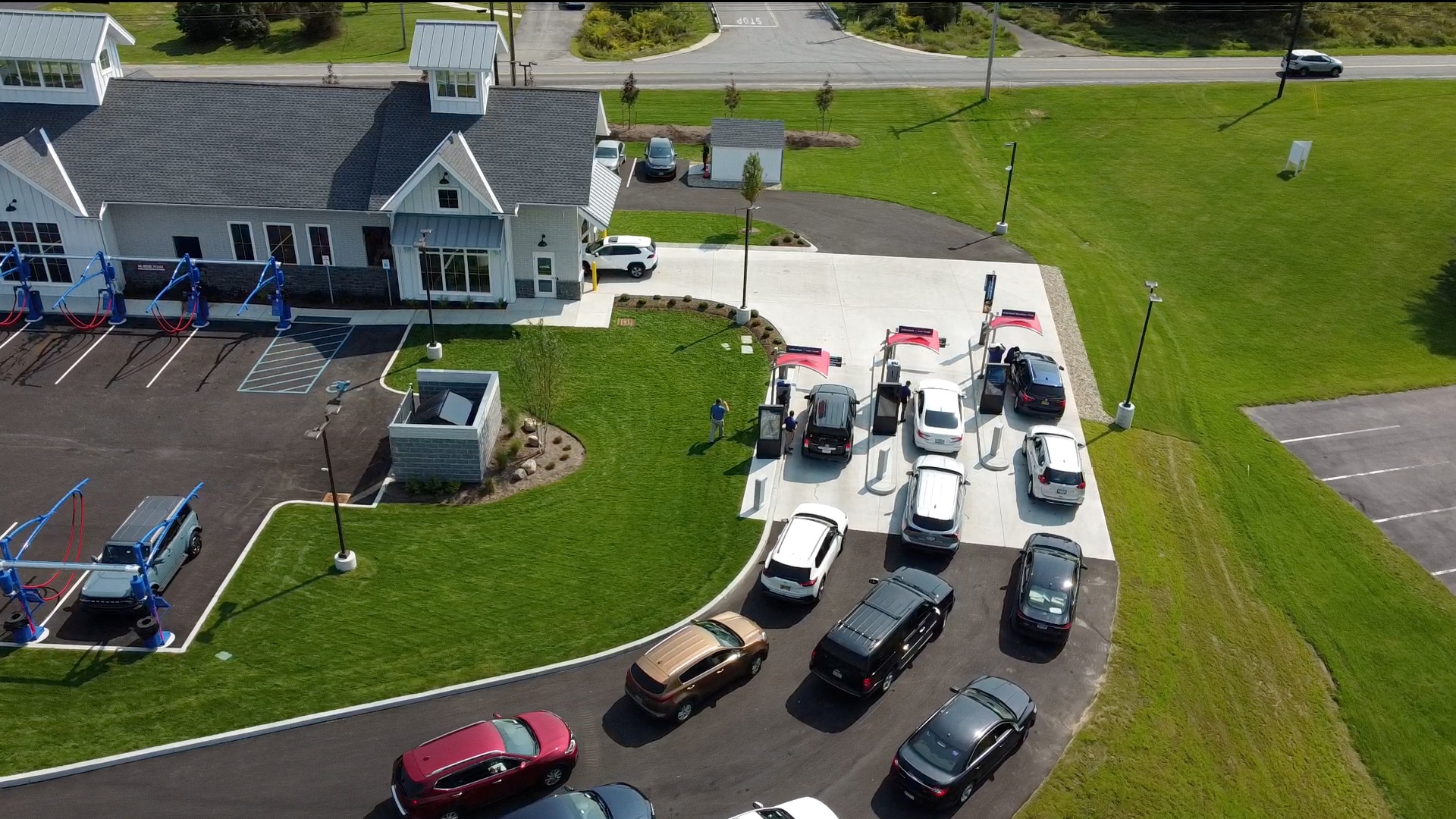
Learn how car wash operators can streamline processes, boost throughput, and deliver a consistent customer experience by improving flow and efficiency.
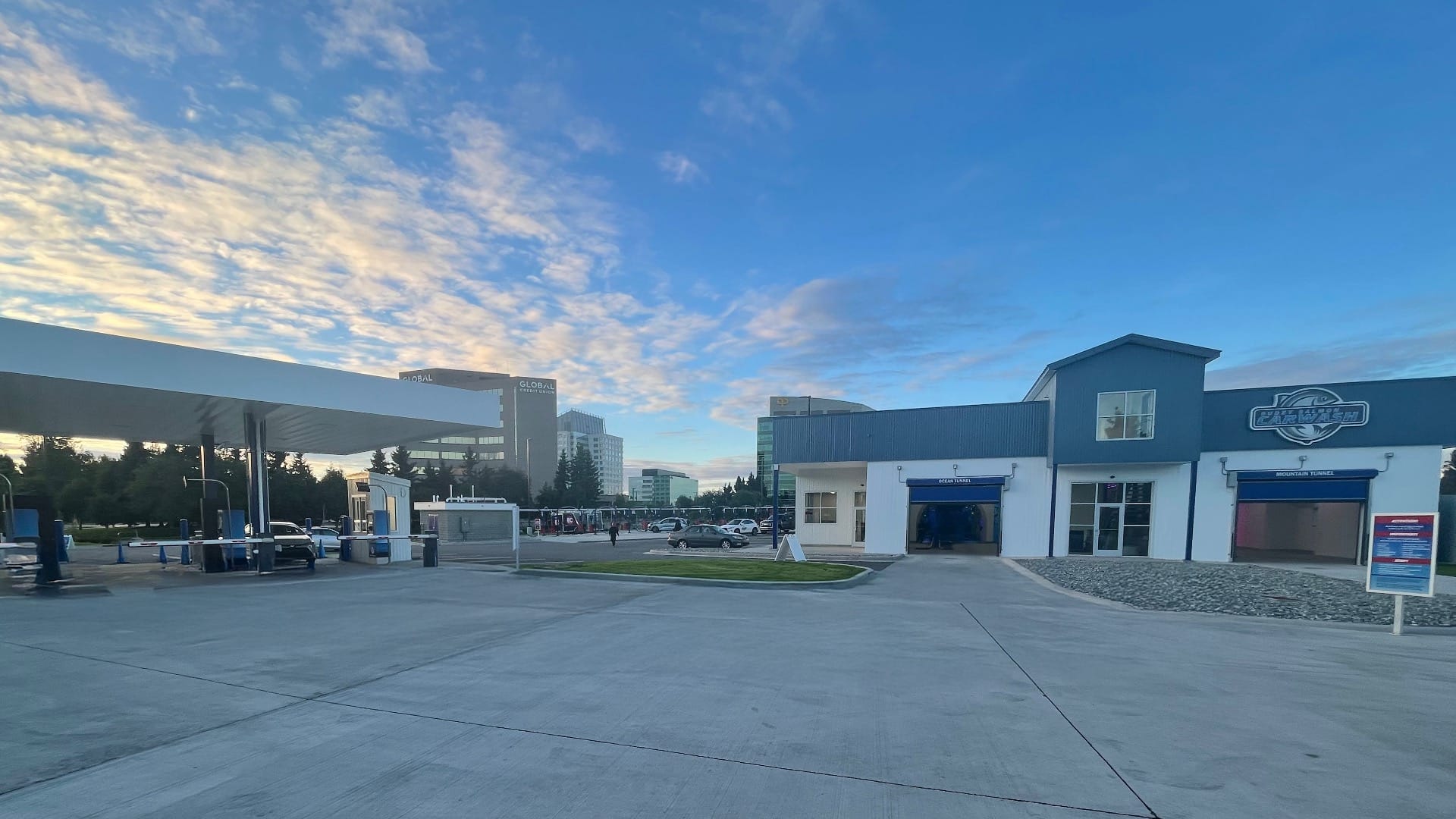
See how Sudzy Salmon in Anchorage optimized a fixed-layout tunnel to go fully prep-less, hit 300+ cars/hour, and boost memberships.
We use cookies to personalize content, provide social media features, and analyze our traffic. We also share information about your use of our site with our analytics partners. You can change your preferences at any time. For more information, please see our Privacy Policy and Cookie Policy. Privacy Policy Cookie Policy
REQUEST A QUOTE
Interested in using our waterjet cutting services? Complete the form to request more information.
Chemical Delivery System
Water Treatment System
Spot-Free Rinse System
High-Pressure Pump Station
Conveyor Hydraulic Unit